

If You End Every Day Feeling Behind, Try This!
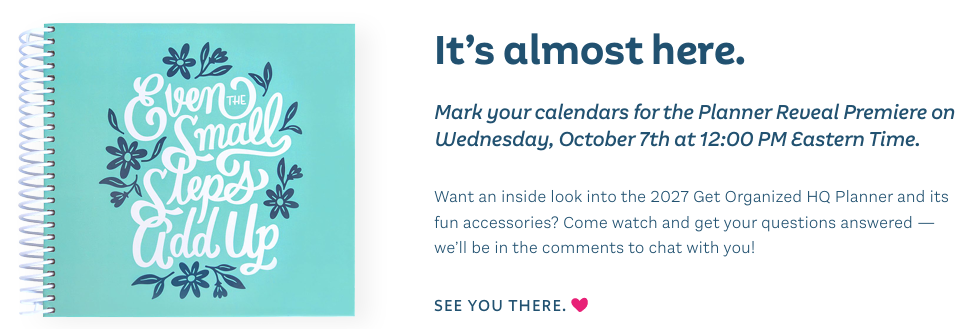
Click the photo to get notified about the premiere!
Have you ever made a giant to-do list in the morning, worked hard all day, and still gone to bed feeling like you didn’t accomplish enough?
I did that for years. I’d write down 15 or 20 things I wanted to accomplish, and then I wouldn’t even get half of them done. Instead of looking at everything I had accomplished, I’d focus on everything still sitting there unchecked. I’d end the day feeling behind and defeated, only to wake up the next morning and do the whole thing again.
Eventually I realized something that completely changed the way I plan my days: that wasn’t actually a to-do list. It was a wish list.
It was a list of everything I could accomplish if there were no unexpected interruptions, every task took exactly as long as I thought it would, and I operated at peak energy all day long. How often does a day like that actually happen?
Not very often.
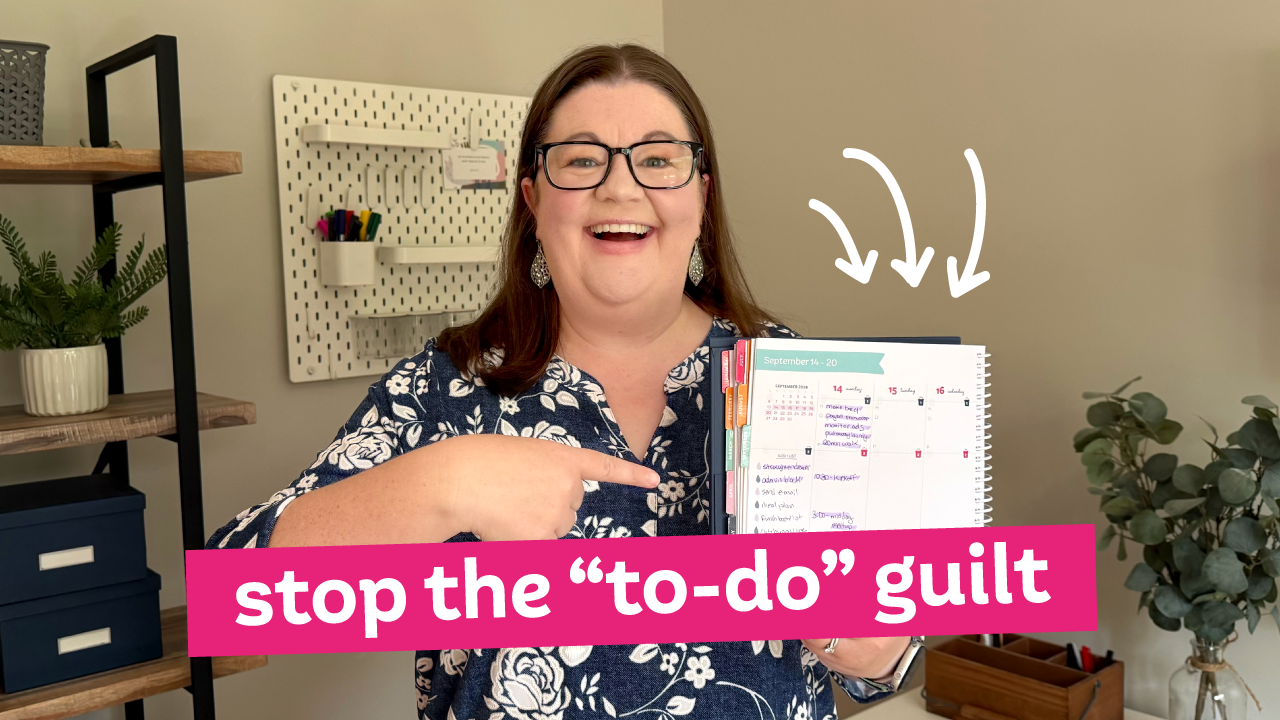
So instead of continuing to create impossible lists and feeling bad when I couldn’t finish them, I developed a different way of planning my days. I call it the Three Bucket System, and it helps me make sure the most important things actually get done without expecting myself to accomplish everything! If you need the same reality check that I did, keep reading, or check out the video here!
Why Traditional To-Do Lists Weren’t Working for Me
I’m really good at making plans. Give me a blank sheet of paper, and I can easily fill it with all the things Future Laura is going to accomplish.
She’s going to clean the entire house, declutter everything, knock out a bunch of work projects, exercise, make appointments, take care of paperwork, and probably bake some muffins while she’s at it.
It’s easy to plan for a version of ourselves in the future who has unlimited time and energy. But when I plan just for today or tomorrow, I’m forced to consider what’s actually happening. What appointments do I have? How much time is available? What really needs to happen? What can realistically wait?
I learned this lesson the hard way several years ago. I had two young kids, a growing business, and we had recently moved. There was a lot going on, and I was still using one giant list to plan my days.
One of the things that repeatedly failed to make it to the top of that list was paying our water bill. We had the money, and paying it would have taken maybe three or four minutes. But it just kept getting pushed aside until eventually the bill was late.
At the time, we lived right on Main Street in a tiny town, and a very noticeable late notice ended up taped to our front door for everyone driving by to see. It was incredibly embarrassing, but it also made me realize that my planning system had a real problem.
I wasn’t just failing to accomplish optional tasks. Important things were slipping through the cracks because everything on my list looked equally important.
The Three Bucket System
That’s when I developed the Three Bucket System.
Instead of writing one giant to-do list and hoping I somehow get to the important things, I divide everything I want or need to do into three categories:
- Bucket 1: Top Priorities
- Bucket 2: Appointments
- Bucket 3: Wish List
The goal is to complete Buckets 1 and 2. Anything I accomplish from Bucket 3 is a bonus.
That one change completely shifted how I felt at the end of my day.

Bucket 1: Your Top Priorities
Bucket 1 contains the three to five things that are most important for you to accomplish that day.
One optional structure I like to use inside this bucket is something I call HOP, which stands for Habit, Objectives, and Passion.
Habit
Your habit is something you’re intentionally working on until it becomes automatic.
For me, that might be making my bed. The nice thing about this category is that you don’t have to choose something new every day. In fact, you shouldn’t. Keep working on the same habit until you really have established it, then you can move on to something else.
Objectives
Next, choose one to three objectives that really need to happen today.
The question I like to ask myself is, “If I went to bed tonight and these were the only things I accomplished, what would I want them to be?”
These are things with actual consequences if I don’t do them, things that are particularly important right now, or things that are causing enough frustration that I really want them handled.
For example, if a bill is going to be late tomorrow, paying that bill belongs here. If it’s not due for another month, it probably doesn’t.
On one particular day, my objectives included paying our storm water bill, monitoring some ads for work, and putting away laundry. The laundry wasn’t going to create some huge consequence if I didn’t do it, but I was tired of digging through a basket of clean clothes every time I needed to get dressed. It had reached the point where getting it done would noticeably improve my day.
Passion
The final part of HOP is passion, and this one is easy to push aside.
Passion is something you’re doing for yourself because it recharges you. It doesn’t need to take hours or be particularly impressive. You might write a gratitude list, take a short walk, call a friend, watch a movie, work on a hobby, or do something else you genuinely enjoy.
For me, this might simply be a 20-minute walk. If I’m spending most of the day sitting at a computer, I know that getting outside and moving my body will make me feel better.
Putting it in Bucket 1 makes it an actual priority instead of something I hope I’ll squeeze in after everything else is finished.
Bucket 2: Your Appointments
Bucket 2 is usually the easiest because it contains anything that has to happen at a particular time.
A doctor’s appointment goes here. So does a meeting, picking someone up at a certain time, a scheduled phone call, or anything else tied to the clock.
Sometimes I actually fill out this bucket first because all I have to do is look at my calendar. Unlike Bucket 1, where I have to decide what deserves priority, my appointments have already been decided for me.
Once I know what’s happening at specific times, I also have a much more realistic picture of how much of my day is actually available for everything else.
Bucket 3: Your Wish List
This is the part that changed everything for me.
Everything else goes on the wish list.
Maybe you’d like to straighten a drawer. Or you want to make muffins to put in the freezer. Maybe there’s a project with a deadline that’s still a few weeks away. You’d like to work on these things, and you very well might, but nothing terrible happens if they don’t get done today.
Some days, I have tons of energy and very few interruptions, and I get through almost my entire wish list. Other days, I might have a headache, my energy might be low, or something completely unexpected happens, and I don’t touch the wish list at all.
Either way, the day can still be successful.
If I’ve completed Buckets 1 and 2, I’ve done the things I decided actually needed to happen.
Most days fall somewhere in the middle. I complete my priorities and appointments and then knock out a few things from my wish list. The difference is that I no longer look at the remaining items and use them as evidence that I’ve failed.
They were optional from the beginning.
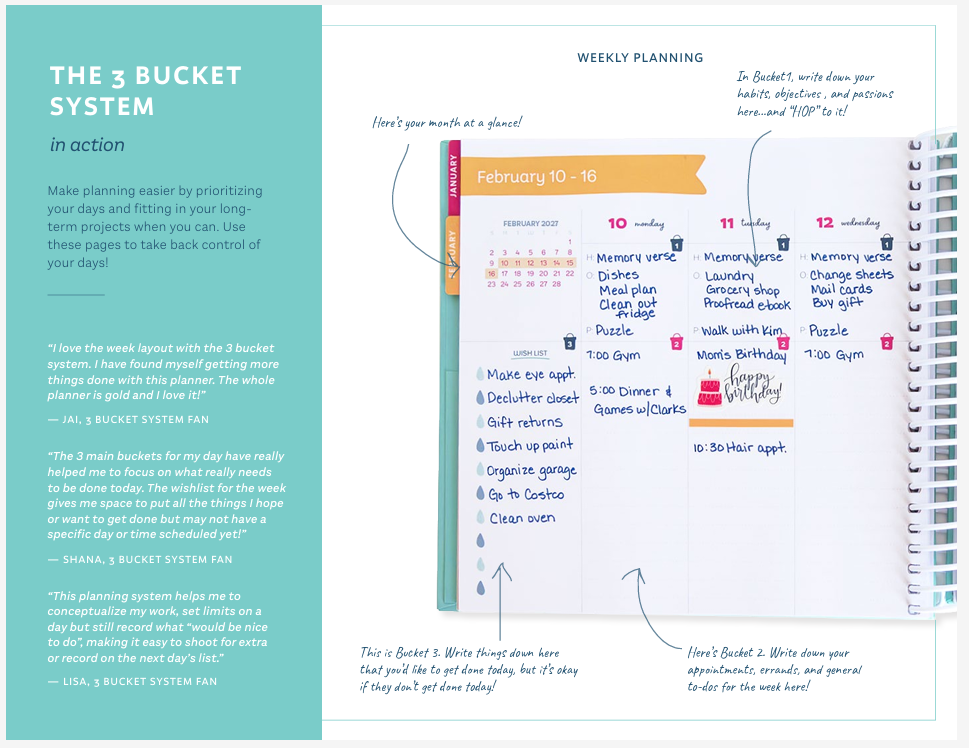
Click the photo to preview the planner in the look book!
You Don’t Need a Special Planner to Do This
I use the GOHQ Planner because it was specifically designed around the Three Bucket System, but I want to make something really clear: you do not need a special planner to use this method.
Grab a notebook from the dollar store. Use a scrap piece of paper. Write your list on the back of an envelope if that’s what you have.
Make three sections, label them Bucket 1, Bucket 2, and Bucket 3, and start planning.
Don’t let finding the perfect planner become another form of procrastination that keeps you from actually using the system.
But What About Everything Else I Need to Do?
One of the most common questions I hear about this system is, “What about everything else? Three objectives aren’t enough. I have 40 things I need to do!”
First, remember that putting something on your wish list doesn’t mean you aren’t going to do it. It simply means you’re committing to your top priorities first. Once those are finished, you can absolutely keep going.
You can also occasionally group similar tasks together. If I have five phone calls to make, I might write “phone calls” as one objective rather than taking up five separate lines. I might do the same thing with a small batch of administrative tasks.
Just don’t cheat.
Writing “clean entire house” as one objective doesn’t magically turn a six-hour project into one task. If your three objectives each contain 27 steps, you’ve simply recreated your giant to-do list under a different name.
Your Priorities Are the Floor, Not the Ceiling
This is one of the most important things to understand about the system.
Your three objectives aren’t the maximum you’re allowed to accomplish. They’re your floor, not your ceiling.
You’re creating a baseline for a successful day. Once those important things are done, you can keep going for as long as your time and energy allow.
I’ve actually found that I often accomplish more this way because I’m starting from a feeling of being on top of things instead of constantly feeling behind. Finishing my priorities creates momentum, and that makes it easier to tackle something else.

Click the photo to come to the launch party for the planner!
What Happens to the Wish List Items You Don’t Finish?
I don’t automatically carry everything forward.
This is important because otherwise you eventually create a massive backlog of all the things you didn’t accomplish during the previous week, month, or year. Then you’re right back to feeling behind.
Instead, I start fresh.
If something on last week’s wish list is still important, I’ll intentionally write it down again. But sometimes I realize it really doesn’t matter anymore.
Maybe I wanted to alphabetize my spices. That might be nice, but if I never get around to it, nothing terrible happens.
I don’t need that task following me around for the next six months making me feel guilty.
What If You Stop Using the System for a Few Days?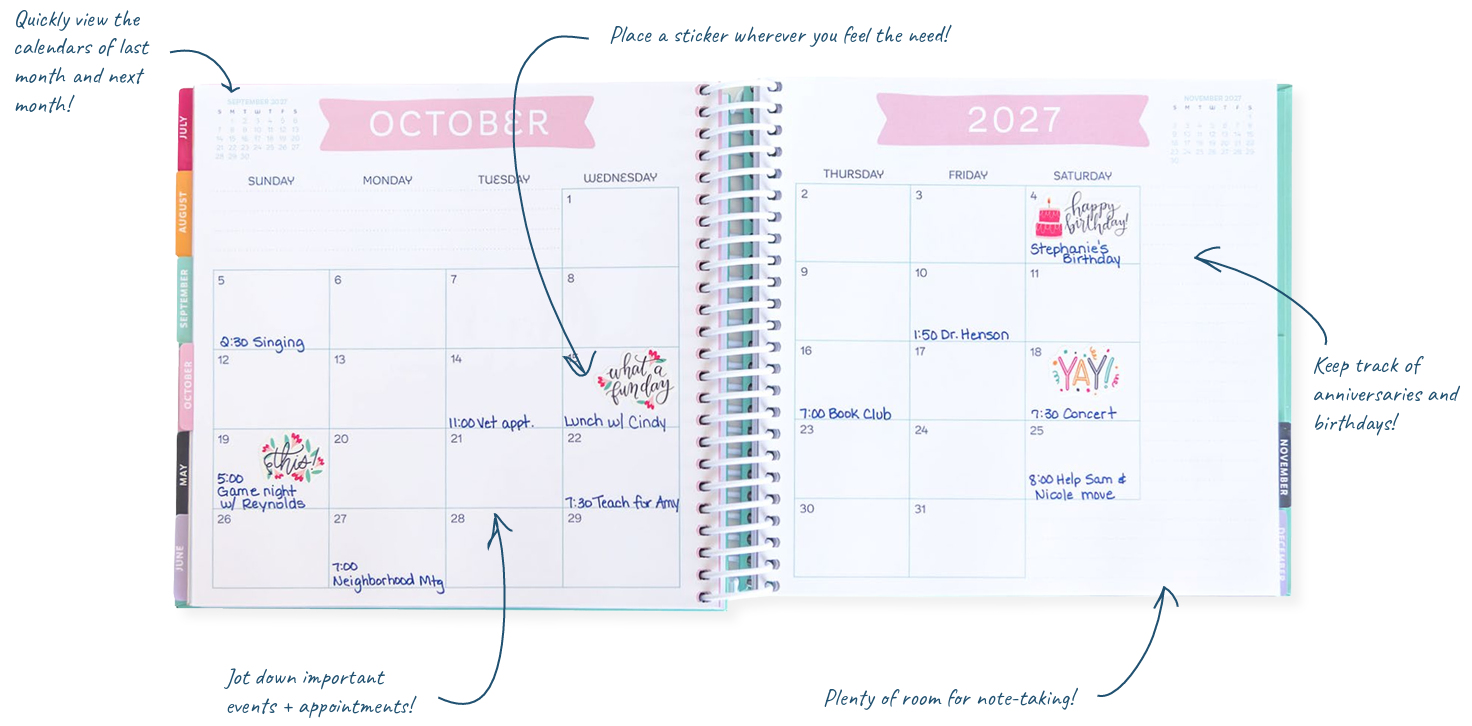
Start again.
That’s it.
You don’t have to wait until Monday, the first of the month, or January 1st. You can restart the Three Bucket System at 3:00 on a Wednesday afternoon.
There is no backlog to catch up on because the entire system is designed around what matters today.
You’re going to have bad days. You’ll get sick, go on vacation, have an unexpected emergency, or simply have a few days when planning isn’t happening. A good system needs to be able to survive real life.
What If You Still Can’t Finish Bucket 1?
If you’re consistently not completing Bucket 1, the first thing I’d look at is whether you’re putting too much in it.
Three objectives can still be completely unrealistic. For example, I could write “script and film three videos” as my three objectives. Technically, I followed the rule and only wrote three things.
But each of those “things” requires choosing an idea, developing it, writing the script, setting everything up, filming, and probably doing several other steps. That’s a huge amount of work for one day.
Be realistic about how much time your objectives actually require. Maybe one longer task and two shorter ones make sense for that day.
Also pay attention to productive procrastination. This is when you’re getting all sorts of things done, but somehow avoiding the things in Bucket 1. If your entire wish list is finished but your most important objective is still sitting there untouched, the problem probably isn’t a lack of productivity. It’s that you’re avoiding the task that actually matters.
Sometimes you simply have to do the important thing before you let yourself move on to the easier things.
What If Your Days Aren’t That Busy?
You might think you only need a system like this during a particularly busy season, but I actually think structure can be even more important when you don’t have much going on.
When there’s no urgency, it’s incredibly easy to think, “I’ll do that later.”
Then you reach the end of the week and realize you had plenty of free time but somehow never got around to the things that were actually important to you.
Having a few intentional priorities gives your day some direction without requiring you to fill every available minute with productivity.
What About Bigger Goals?
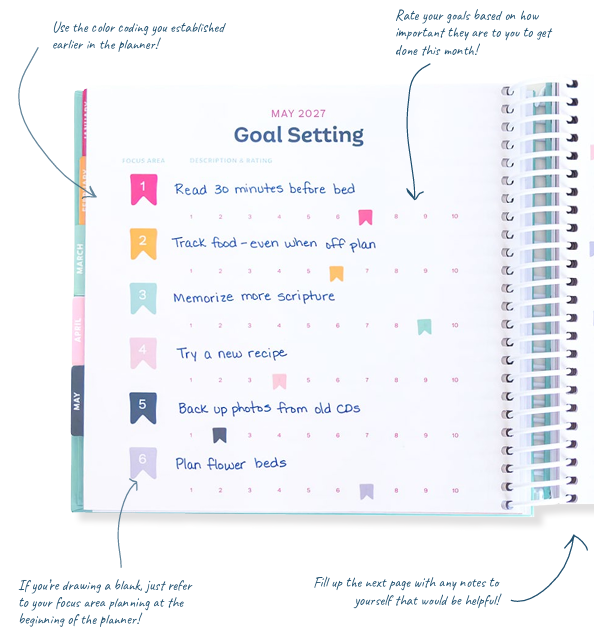
The Three Bucket System is designed primarily for planning today or tomorrow, but that doesn’t mean you shouldn’t have longer-term goals.
I like to think about my bigger intentions for the year and then choose a few things to focus on each month. When I’m planning my individual days, I can look at those monthly goals and decide whether one of today’s priorities should move me toward them.
The important thing is that I also start fresh with my goals regularly. I’m not endlessly dragging an unfinished goal from month to month simply because I wrote it down once. I can reevaluate whether it still matters and decide intentionally what I want to focus on next.
A Completely Different Way to Measure a Successful Day
When I tested this system with a list of 19 things, I completed all five things in Bucket 1, all three appointments in Bucket 2, and four things from my wish list.
That means I completed 12 out of 19 things.
Years ago, I would have looked at those exact same numbers and thought, “I didn’t even finish my list.”
I would have gone to bed feeling behind, defeated, and already worried about how I was going to catch up the next day.
Now?
I can look at that day and feel great about it. I accomplished every single thing I had decided was important, showed up for all my appointments, and still managed to get four extra things done.
Nothing about how much I accomplished changed. What changed was that I stopped pretending all 19 things were equally necessary in the first place.
That’s why the Three Bucket System has made such a difference for me. It doesn’t magically give me more hours in the day or guarantee that nothing unexpected will happen. It simply helps me decide ahead of time what a successful day actually looks like.
And that means I can finally finish a day with things still left undone and know that I got the things done that really mattered. You can implement this today without any special tools, but if you want the planner that I designed for myself around this system, you can click the photo below to get the Planner Lookbook.

Get the 2027 Planner Lookbook!




 Copyright 2026, Get Organized HQ.