

I Found the Best Bin at Walmart… BUT There’s a Catch
The Multi-Purpose Bins are hands down my favorite organizing bins of all time. I’ve used them for over a decade in almost every room of my house — pantry, closets, office, toy storage, you name it. And this is about the only time you’ll hear me say this: I actually recommend buying these ahead of time and keeping a few on hand.
To find out which line of bins I recommend and what the differences are, keep reading, or check out the video here!
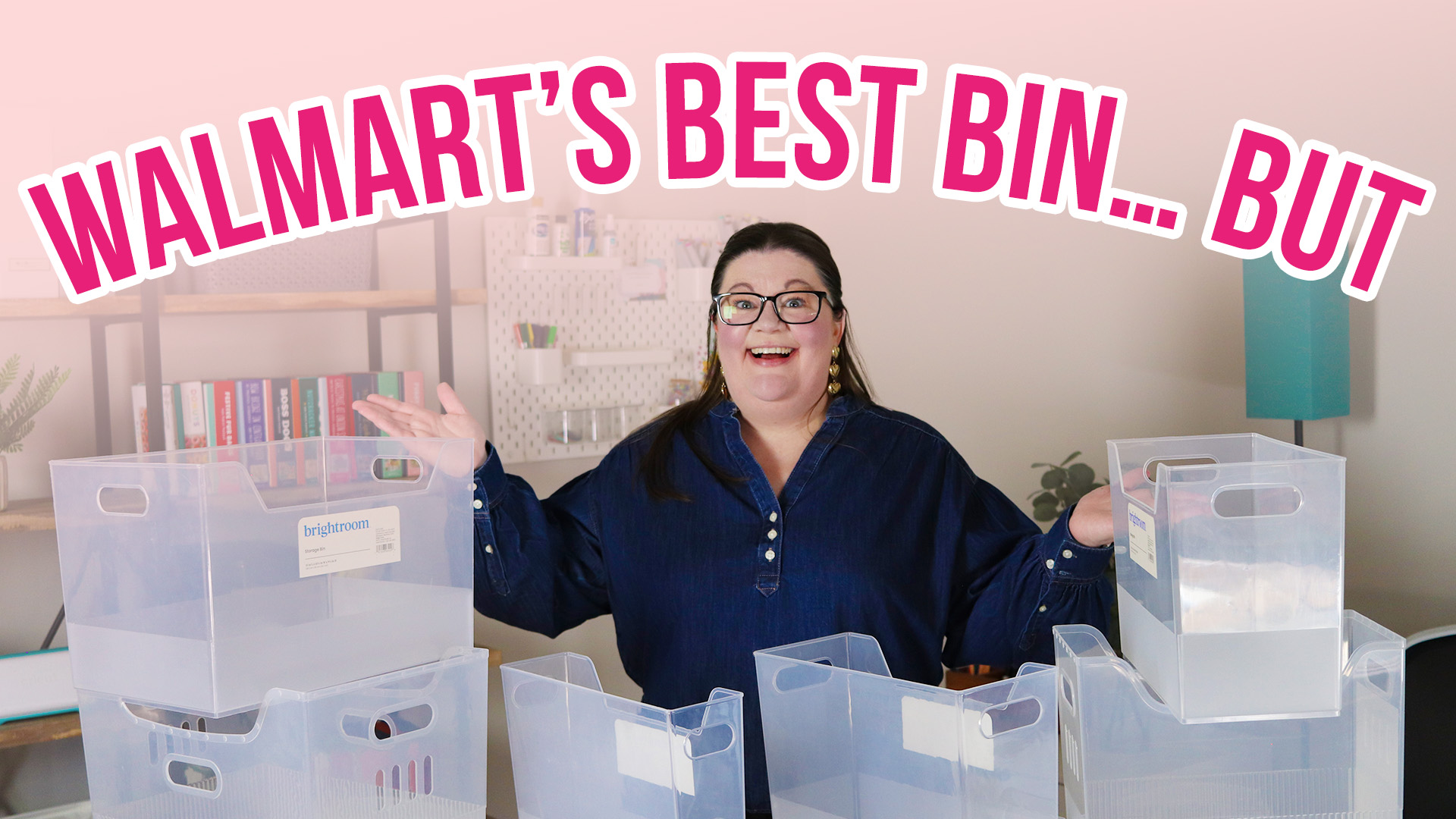
I first bought these nearly 15 years ago from The Container Store. Back then, that was the only place you could get them. Now you can find nearly identical versions at Target (under their Brightroom line) and Walmart.
They look extremely similar. They function the same way. But once you live with them, the differences start to matter. So I put them through a real-world showdown — not based on technical specs, but on how they actually perform in your home.
And I’ll tell you upfront: the price results completely surprised me! We’re comparing them across nine real-life categories.
1. The Shelf Test
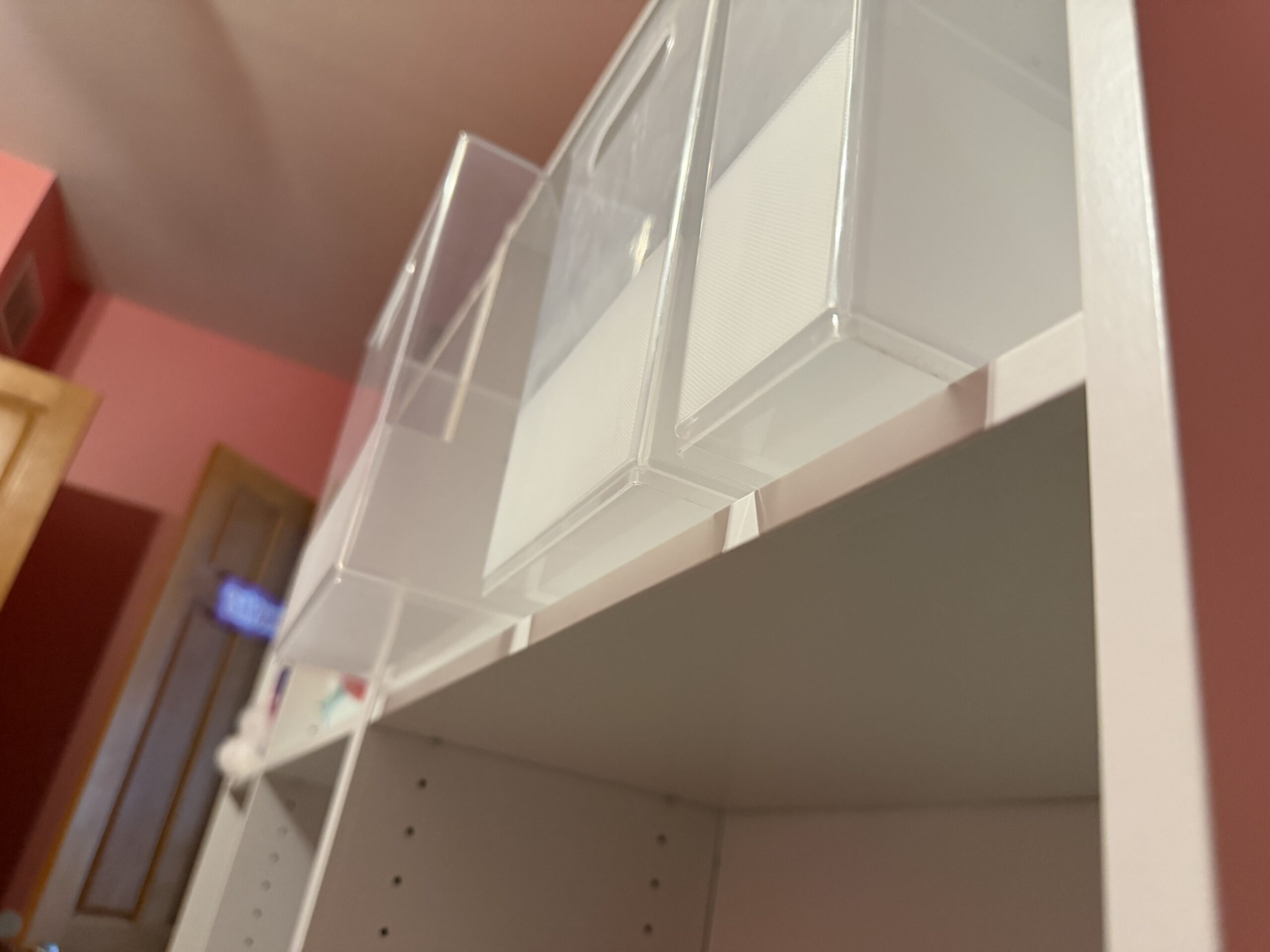
How do they actually fit on real shelves?
All three brands are almost identical in depth. On deeper shelves — like pantry shelves, IKEA cube units, wire shelving in closets, or slightly deeper office shelving — they fit beautifully. In fact, they fit so well on standard wire pantry shelves that they feel custom made.
On shallower shelves (like some standard Target bookcases), they will hang off the front slightly. It doesn’t make them unusable, but if that visual bothers you, it’s something to consider.
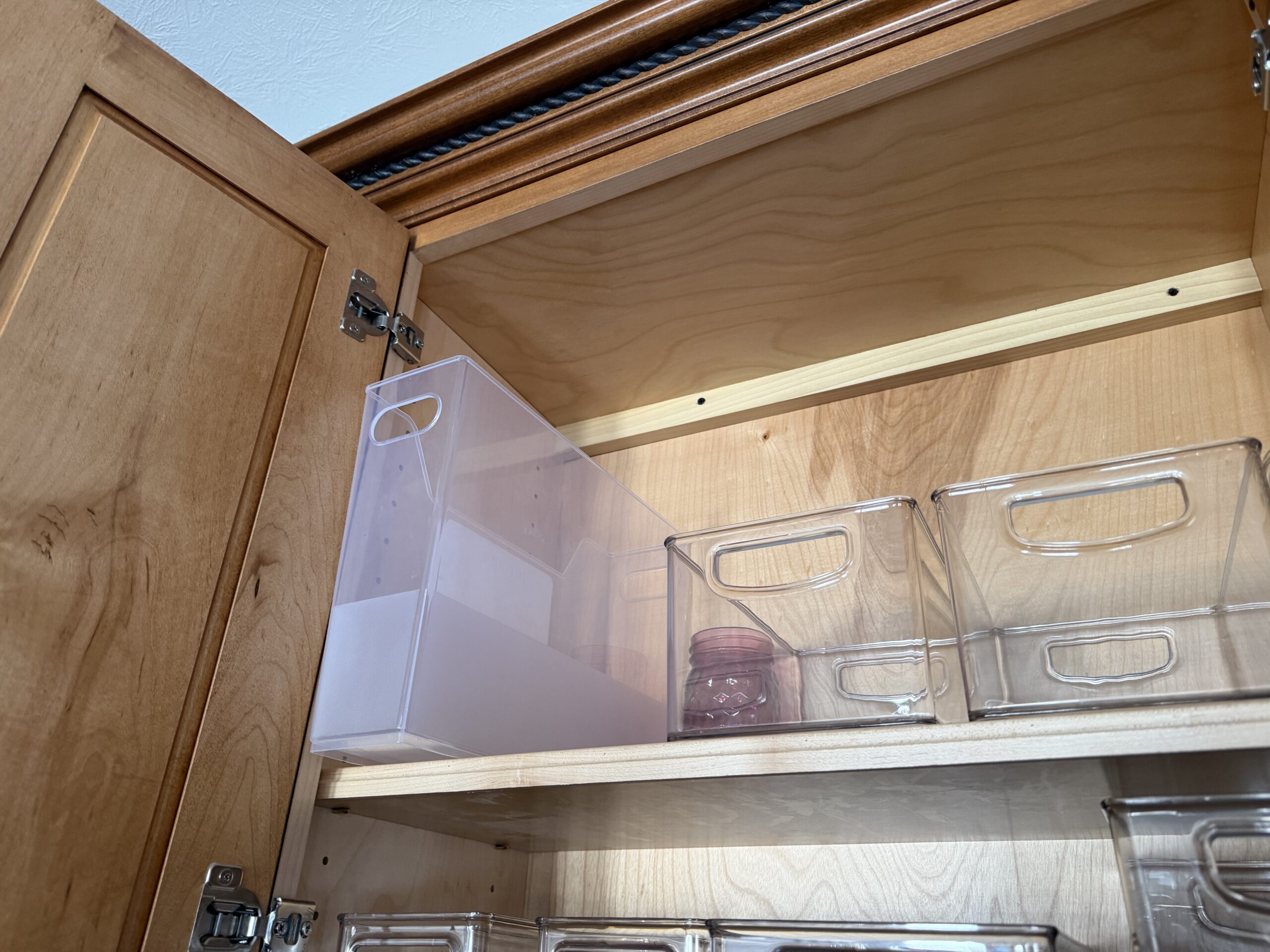
Upper kitchen cabinets? They won’t fit — you won’t be able to close the door. Lower cabinets? They work, but you may have some unused space behind them.
Here’s the thing: if they were shallower, you’d waste space on deeper shelves. In most homes I’ve lived in, shelves are deep enough that this depth is an advantage.
Shelf Test: 5/5 for all three (tie).
2. Modularity
How well do they line up and work together?
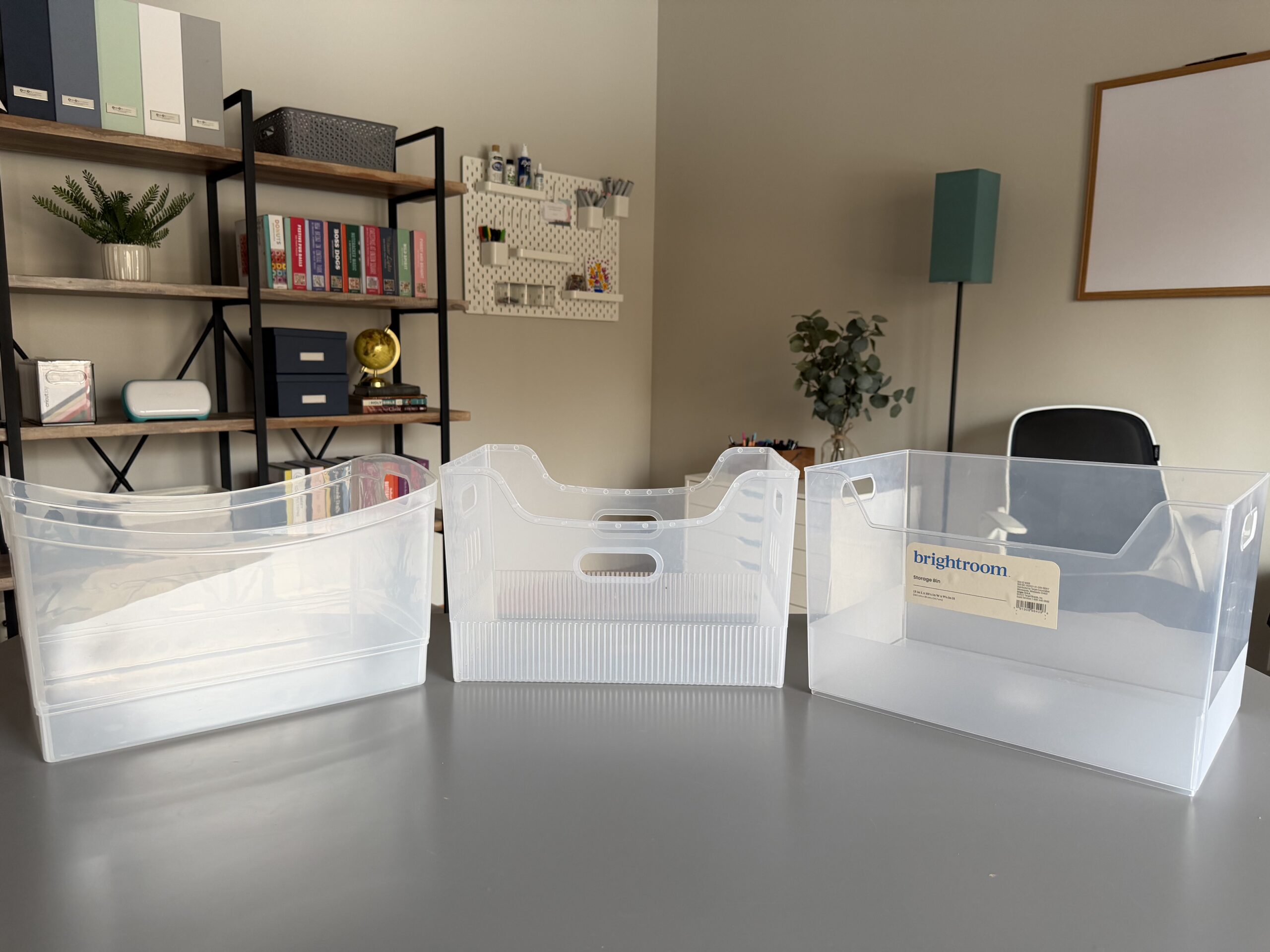
The three smallest sizes across brands are the same depth and line up cleanly when placed side by side. However, the extra-large size is slightly deeper than the others. For reasons I cannot explain, every brand made the largest size deeper than the rest.
You can rotate it, adjust it, push it forward — but it won’t align perfectly with the smaller sizes.
It’s not a deal breaker, but it’s not perfectly modular either.
Modularity: 4/5 for all three (tie).
3. Space Maximization
These bins are not stackable, but the tall sides allow you to use vertical space very efficiently. Because there’s no lid, items can stick up slightly without becoming unusable.
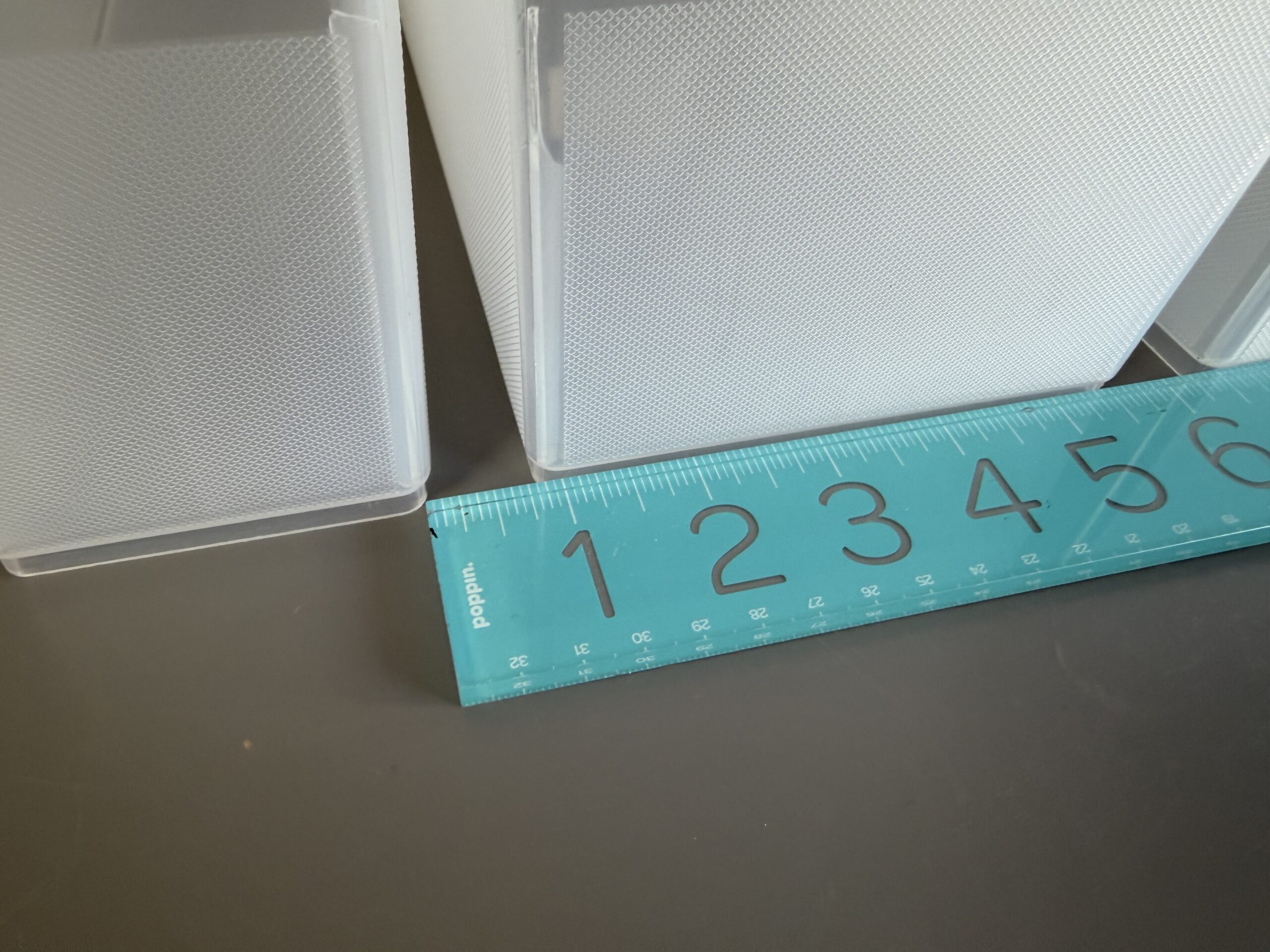
One key difference shows up in the side angle. Most plastic bins taper inward so they can nest inside each other for shipping. The less taper, the better — because that means less wasted shelf space.
-
Container Store: about ¾ inch gap when placed side by side
-
Target: just over ¾ inch
-
Walmart: about 1¼ inches
The difference isn’t massive, but it does add up across a full shelf.
Container Store: 4.5/5
Target: 4.5/5
Walmart: 4/5
4. Grab-and-Go Ability
This is where these bins shine.
All three brands have sturdy built-in handles that make it easy to grab the entire bin and carry it somewhere else. If you’re storing a project, supplies, or pantry category, you can lift it off the shelf and bring it to your workspace.
Because they’re open-top and not stacked, retrieving a single item is incredibly easy. Compare that to stacked bins with lids — you’d have to remove multiple bins just to reach the bottom one.
With these, nothing blocks you. That makes them easier to maintain long term.
Grab-and-Go: 5/5 for all three (tie).
5. Durability (Including a Weight Test)
All three are made from slightly flexible plastic. They bend a little but don’t feel brittle.
I’ve owned my Container Store bins for 10–15 years and have never had one crack or break. My Target bins are about two years old with no issues. Walmart’s have held up well too.
We even tested them with nearly 30 pounds of weight inside. None of them bowed significantly. Cheap plastic would have cracked under that load — these didn’t.
Durability: 5/5 for all three (tie).
Up to this point, they’re neck and neck. But now we start seeing real differences.
6. The Label Test
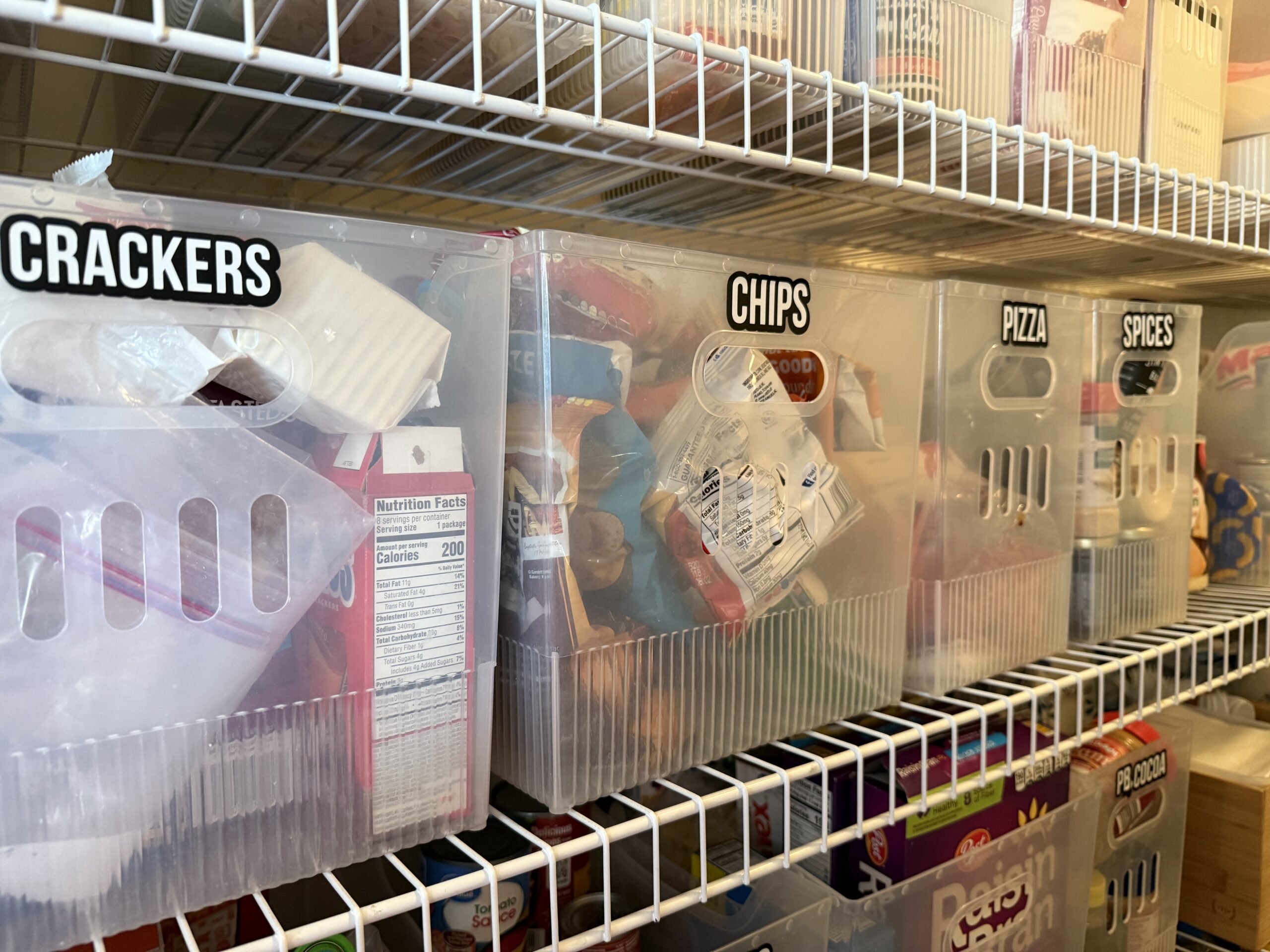
If you’ve followed me for a while, you know labels matter.
The Container Store version has venting holes on the front. Those holes interfere with larger square labels or vinyl lettering. You can still use narrow label-maker tape, Sharpie and freezer tape (my go-to), or clip-on label holders — but your options are slightly limited.
Target and Walmart both have a clean, flat front panel that works beautifully with any label type.
Target: 5/5
Walmart: 5/5
Container Store: 3/5
7. Color Selection
This is where the Container Store wins easily. They offer clear plus about eight additional colors — grays, pinks, and other fun options.
Target and Walmart only offer clear.
However, here’s my practical advice: I still recommend sticking with clear. If you mix colors by room and later want to move bins around, the mismatch becomes frustrating.
Even so, the Container Store wins for sheer selection.
Container Store: 5/5
Target: 4/5
Walmart: 4/5
8. Size Selection (Biggest Decision Factor)
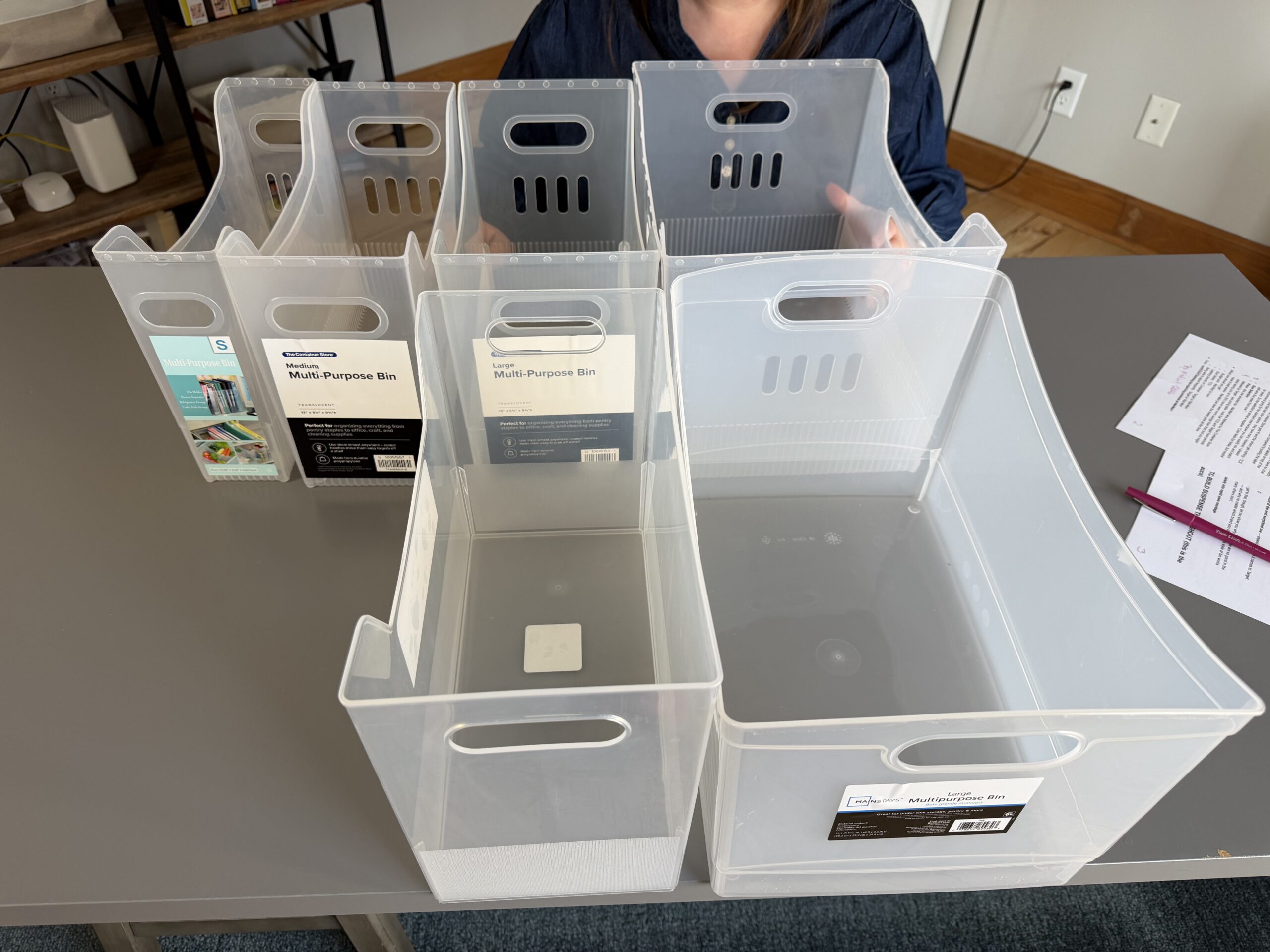
This is the second most important factor after price.
-
Container Store carries small, medium, large, and extra large.
-
Target currently carries three sizes (but may be missing the large — which happens to be my favorite).
-
Walmart carries only two sizes.
The large size is incredibly useful — it fits boxed mixes (cake, brownie, muffin) perfectly. If you want all four sizes available consistently, the Container Store is your safest bet.
Container Store: 5/5
Target: 4/5
Walmart: 3/5
9. Price (This Is Where It Gets Interesting)
I expected the Container Store to be most expensive, then Target, then Walmart. That’s not exactly how it played out.
Prices vary by size.
Largest size:
-
Target: $13
-
Container Store: $10
-
Walmart: about $6
Large size:
-
Container Store: $9
-
Walmart: about $5
-
Target: currently unavailable
Medium size:
-
Container Store: $8
-
Target: $8
-
Walmart: not available
Small size:
-
Container Store: $7
-
Target: $6
-
Walmart: not available
Walmart does not run sales — their price is simply low all the time. Target and the Container Store occasionally offer about 25% off, but you may have to wait months.
If you were filling an entire shelf with 15 bins, the total cost difference becomes significant. Walmart would come in around $80. Container Store around $105 (on sale). Target around $120.
Price Ranking:
Walmart: 5/5
Container Store: 4/5
Target: 3/5
So Which Should You Buy?
If price matters most, go with Walmart. You won’t beat it.
If you need all four sizes consistently available, go with the Container Store.
If you value easy labeling and convenient in-store access (especially if you live close to a Target), Target is a strong option.
As for me? I started with Container Store bins 15 years ago when they were the only option, and I love matching bins — so most of my home is still Container Store. But my toy area is Target because I can grab one in under 15 minutes if I need it.
Here’s the bigger takeaway: once you find a bin system that works, stick with it. Consistency makes your home feel calmer and more intentional.
And if you love discovering practical, real-life organizing products that actually hold up, you’ll want to check out my full list of favorite organizing products for this year — this bin made the list, and so did 19 other things I use constantly in my own home.



 Copyright 2026, Get Organized HQ.
Colleen Says
Very interesting facts about containers. Thanks for doing all that research, time saver for me!
Thanks for sharing all your knowledge!
Laurie Q Says
Since the Container Store isn’t in all areas (our closest one is several hours away), you would have to factor in shipping on top of their price.