

10 Surprising Habits of Disorganized People
What do perfectionism, working really hard, making lots of lists, being creative, and saying yes to people have in common? They all sound like pretty good qualities. But surprisingly, they can also be habits that make it much harder to stay organized!
And before we go any further, I’ve done every single thing on this list.
This isn’t about labeling someone as an organized or disorganized person. I truly believe organization is a skill that anyone can learn, and being organized doesn’t necessarily mean having a perfectly tidy house filled with matching bins and beautiful labels.
In fact, by the time we get to the last one, you might discover that you’re actually a lot more organized than you thought! Keep reading or watch the video here to find out if you do any of these things, too!
1. They’re Perfectionists
You might assume a perfectionist would naturally be incredibly organized. After all, if you want to do everything to the best of your ability, wouldn’t you also want your house to be perfectly clean and organized?
The problem is that perfectionists often give too much time and effort to individual tasks.
This is something I struggle with myself. If I decide to clean the bathroom, I’m not naturally inclined to give it a quick ten-minute clean and move on. Before I know it, I’m on the floor with an old toothbrush cleaning the tiny crevices around the base of the toilet.
Two hours later, the bathroom looks amazing.
But I haven’t done the laundry, washed the dishes, or taken care of any of the other things that needed my attention.
One of the strategies that has helped me the most is intentionally trying to do a C job. Instead of making my goal to clean the bathroom as perfectly as possible, I make my goal to do the C-level version of the task really well.
The bathroom doesn’t need an A+ cleaning every Tuesday. Sometimes good enough really is good enough!
2. They’re Really Hard Workers

Disorganized people sometimes get labeled as lazy, but that hasn’t been my experience at all.
In fact, they can be incredibly hard workers.
The problem is that sometimes all of that effort gets laser focused on one thing. I can absolutely do this when I get really excited about a work project or something I’m doing around the house. I’ll throw myself into it, work incredibly hard, and let all the boring daily maintenance fall by the wayside.
Unfortunately, maintenance tasks tend to get harder the longer you ignore them.
If I don’t wash the dishes for a few days, I don’t simply have the same dishes waiting for me three days later. I have a much larger pile, food has dried onto them, and the entire job is now harder and takes longer.
Working hard is a great quality. The trick is making sure you’re not working so hard on one thing that everything else falls apart around it.
3. They Say Yes Too Often
This is probably the one I’m most guilty of.
I’m a huge people pleaser. If someone asks me to do something, or sometimes if I simply think they want me to do something, my instinct is to say, “Sure! No problem!”
Except sometimes there actually is a problem. I’ve already committed to too many things.
And saying yes isn’t just something we do with other people. We can also say yes to ourselves too often.
Maybe you have tons of interests, hobbies, projects, goals, and things you’d genuinely love to do. None of them are bad. But every yes adds something else to your schedule or something else you have to maintain.
Eventually there simply isn’t enough time or energy to take care of everything you’ve said yes to.
Sometimes staying organized has less to do with finding a better system and more to do with having fewer things competing for your attention.
4. They Love Lists a Little Too Much
default
You might assume a disorganized person hates to-do lists.
Sometimes the exact opposite is true.
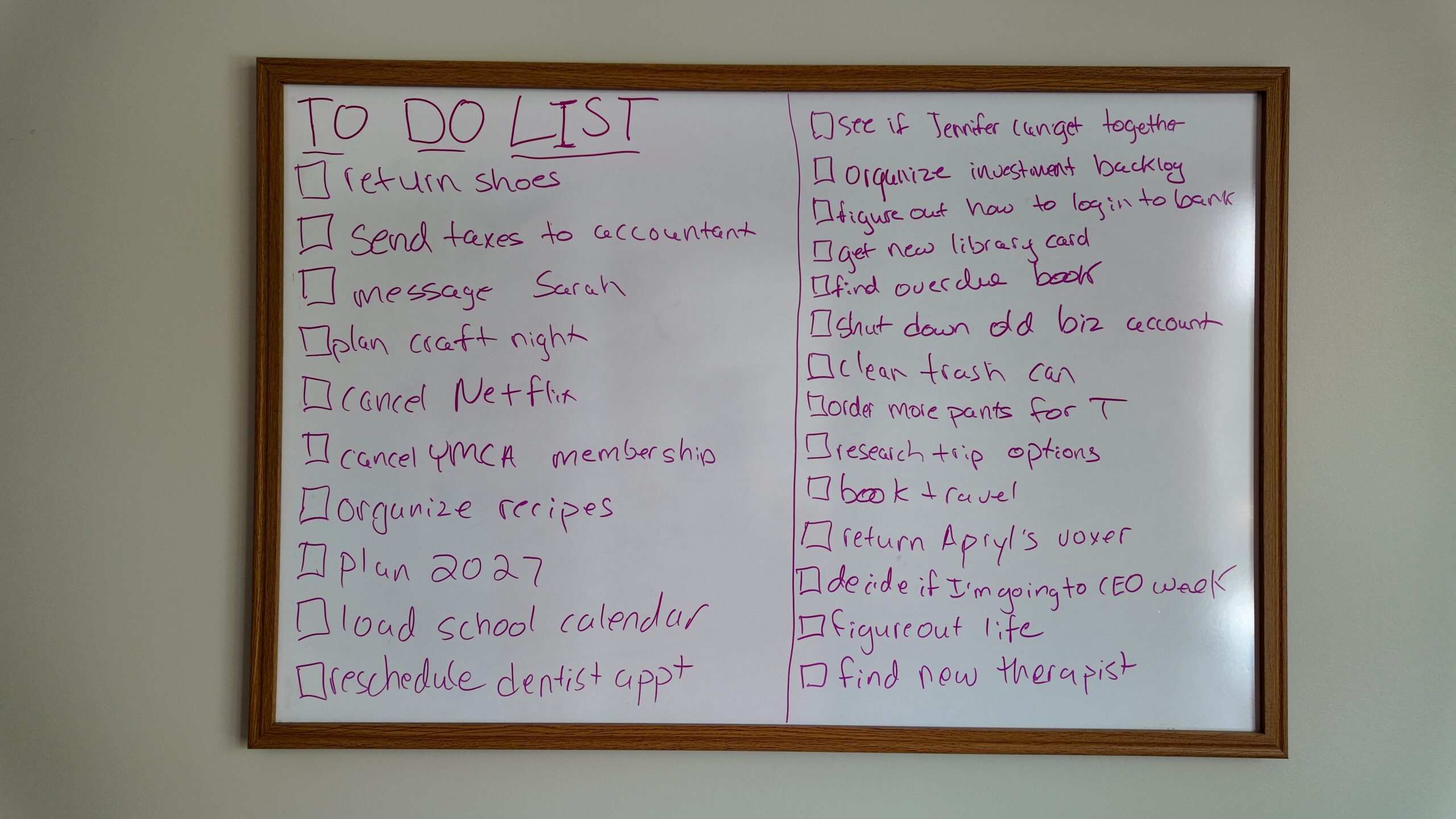
They may love making lists, organizing lists, creating new notebooks for lists, downloading apps for lists, color coding lists, and developing elaborate systems for keeping track of all their other lists.
And at some point, managing the system becomes another task.
You have one list in an app, another in a notebook, a few notes somewhere else, and an elaborate system that made perfect sense when you created it but now feels completely overwhelming.
Often, fewer and simpler lists work better.
The purpose of a list isn’t to have the world’s most impressive system for recording what you need to do. It’s to help you actually do the things.
5. They’re Clutter Blind

This is something that can happen to pretty much anyone.
Imagine your kitchen island is completely clear. Someone sets a stray pen on it.
You notice the pen immediately because it stands out.
Then someone leaves a piece of paper beside it. You notice that too. But you don’t deal with either one right away, and after a few days, your brain starts getting used to seeing them.
Another item gets added. Then another.
Eventually you can walk past that pile 20 times a day and barely register that it’s there.
The same thing can happen with that laundry basket of random stuff sitting in the corner of your bedroom. The first few days, you notice it every time you walk into the room and think, “I really need to deal with that.”
Five months later?
You barely see it.
Then someone tells you important company is coming over and suddenly you see your house with completely different eyes. All those things you’ve been looking past jump out at you again.
Sometimes the problem isn’t that you’re unwilling to deal with the clutter. Your brain has simply stopped noticing it.
6. They Get Stuck Making Tiny Decisions
I say all the time that most clutter is really just postponed decisions.
Something sitting out isn’t necessarily there because you’re too lazy to walk across the room and put it away. Often, the real problem is that you don’t quite know what to do with it.
Maybe that pen doesn’t actually have a home.
If you decide to give it a home, you have to figure out where that should be. Maybe the drawer where it should go is already a mess, so now you’d need to clean out the drawer first. Suddenly putting away one pen has turned into an entire project.
Some of us also have a tendency to be a maximizer. We don’t just want to make a decision. We want to make the best possible decision.
I can do this with something as inconsequential as whether I should fold the laundry or wash the dishes first. I could mentally run through every possible scenario, create a pros and cons list, and spend 15 minutes figuring out the most efficient order.
Meanwhile, I haven’t folded a shirt or washed a plate.
Most decisions simply aren’t important enough to deserve that much mental energy. Sometimes the best thing you can do is recognize that this isn’t a high-stakes decision, choose something, and start.
Save all that careful analysis for the decisions that actually deserve it.
7. They See Routines as a Trap

Some people find routines incredibly comforting. They love knowing exactly what they’re going to do and when they’re going to do it.
Other people hear the word “routine” and immediately feel trapped.
I’m somewhere in the middle.
I definitely don’t want every minute of my day planned out. That would drive me crazy. But there are certain routines that give me an incredible amount of freedom.
Clean Slate Day is a great example. Having a regular time when I deal with all those annoying administrative tasks hanging over my head actually relieves stress during the rest of my week. I don’t have to constantly wonder when I’m going to deal with them because I know there’s a plan.
The mistake is assuming that if you dislike rigid schedules, you can’t have any routines at all.
Your routine doesn’t have to be, “Every Tuesday at exactly noon, I do this.” It could simply mean, “Sometime this week, I’m going to find a block of time and take care of this.”
A home needs at least some basic maintenance to keep running. The key is finding enough structure to make sure things happen without creating so much structure that you feel trapped by your own schedule.
8. They’re Way Too Hard on Themselves
Pay attention to the way you talk to yourself when your house gets messy.
If you walked into a friend’s home and it was a disaster, would you say, “Wow. What is wrong with you? You must be incredibly lazy if you can’t keep your house under control.”
Probably not.
You’d be much more likely to think, “They must have a lot going on right now.” You might even offer to help.
But when it’s our own house, we can be incredibly harsh.
The problem isn’t only that this makes us feel bad. It can actually make it harder to get organized.
Imagine you have a junk room you’ve decided to work on for 15 minutes a day. You spend your first 15 minutes making a few difficult decisions and only manage to deal with three items.
You could tell yourself, “I can’t believe I let this room get this bad. I only got through three things! At this rate, it’s going to take me two years.”
How excited are you to go back tomorrow?
Not very.
Or you could say, “I’ve had a lot going on, so it makes sense that this room got away from me. Those three things took a while to deal with, but now they’re done and I never have to make those decisions again.”
Same room. Same 15 minutes. Same three items.
Completely different experience.
Being kinder to yourself isn’t about pretending a problem doesn’t exist. It’s about making it easier to keep coming back and making progress.
9. They’re Great at Starting, But Not Finishing
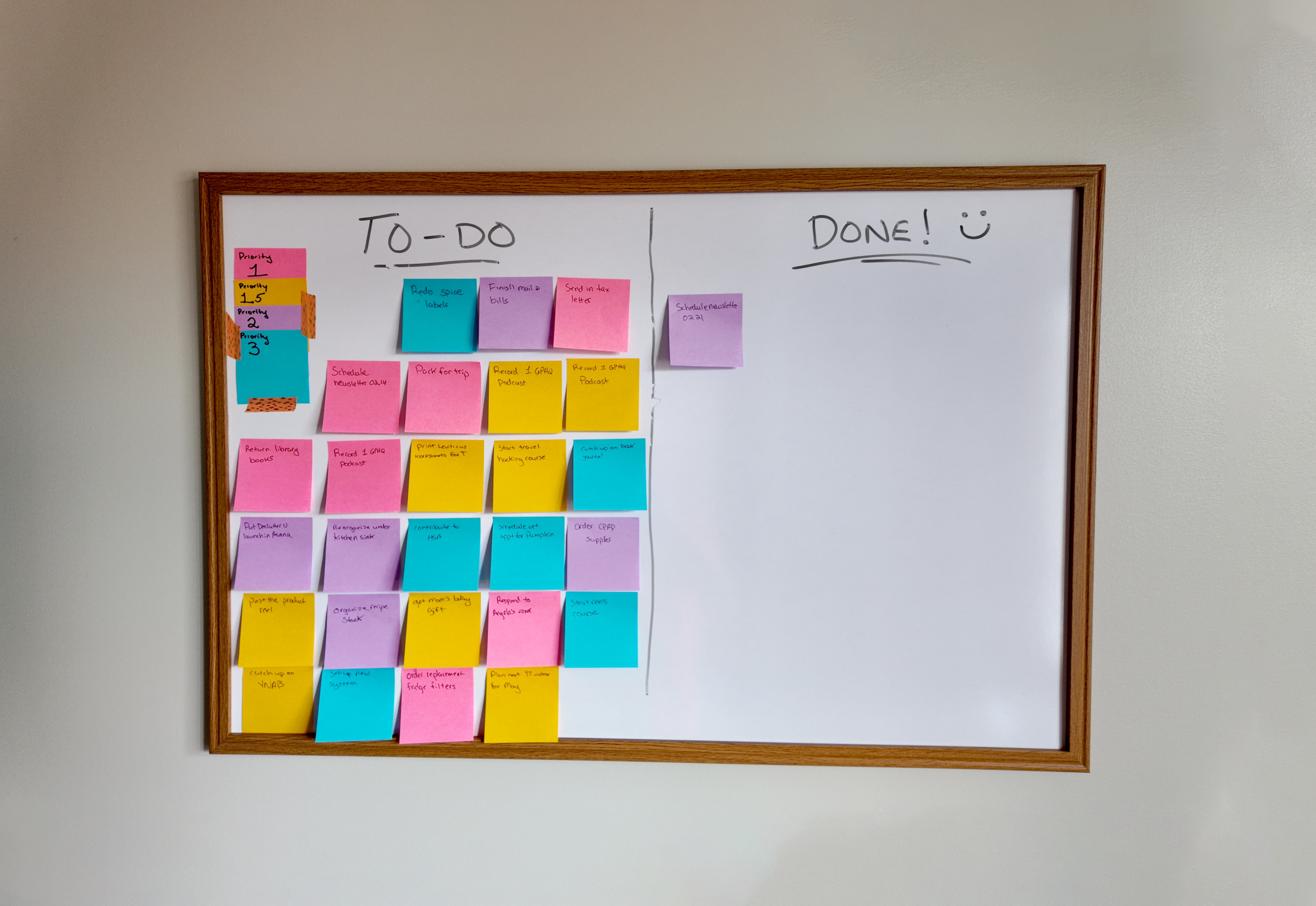
A lot of us are really good at the first 90% of a project.
We get excited. We go all in. We make huge progress.
Then there’s that annoying final 10%.
Maybe you decluttered the entire closet and filled four bags with donations, but the bags never actually made it into your car. Eventually people start digging through them, things get pulled back out, and six months later the donation pile has somehow become part of the room again.
Maybe you reorganized almost the entire pantry, but there’s still a little collection of random things sitting in the corner that you never figured out.
You never get that satisfying feeling of declaring the project done.
Having too many unfinished projects can create a completely different type of clutter. Instead of stuff clutter, you have project clutter. There are half-finished things everywhere, and every single one is asking for a little piece of your attention.
Sometimes it’s worth resisting the excitement of starting something new and putting that energy into finishing the last 10% of something you’ve already started.
10. They Have Way Too Much Faith in Future Them
I love making plans.
Future Laura is amazing.
She’s going to stay on top of the house, organize all of her to-dos, follow the elaborate new system I’ve created, and execute everything beautifully starting Monday morning.
There’s just one problem.
Monday Laura and Current Laura are the same person.
Nothing magical is going to happen over the weekend that gives me unlimited motivation, tons of extra energy, or a completely different personality.
We tend to create plans for an imaginary future version of ourselves who has none of our current limitations. Then when the real version of us can’t execute the plan, we think we’ve failed.
Instead, make your plans with the assumption that current you is the person who has to carry them out.
If you hate doing something now, Future You probably isn’t going to suddenly love it. If you struggle to maintain complicated routines now, January 1st isn’t going to magically turn you into someone who loves complicated routines.
A very simple plan that you can actually follow consistently is much better than an elaborate, perfect plan that you abandon three days later.
11. They’re Extremely Creative
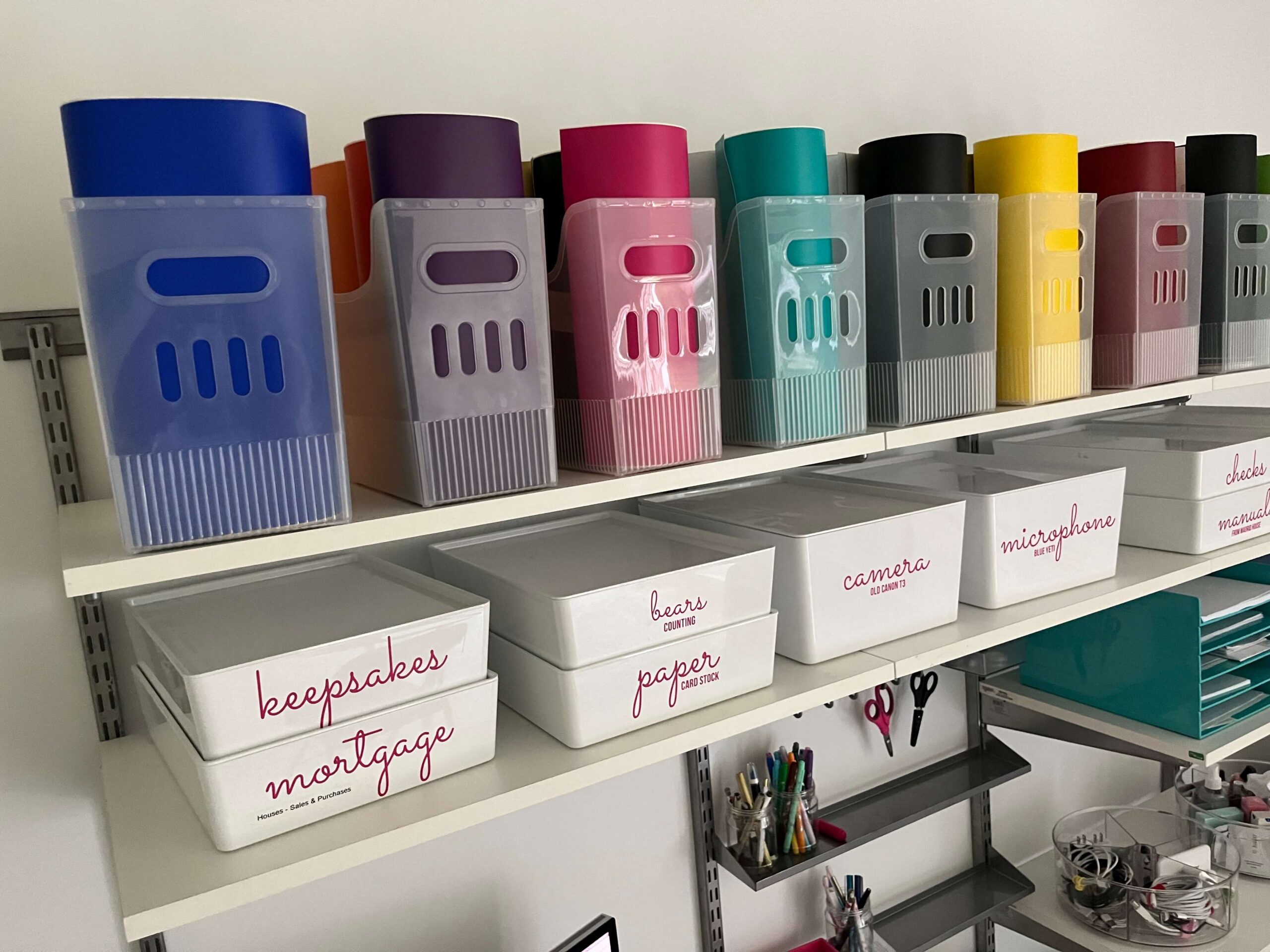
And a bonus, LOL– this is another trait that sounds completely positive, and it is.
Creative people see possibilities everywhere.
Those empty Pringles containers? You could make something with those.
The empty toilet paper rolls? There are tons of crafts that use those.
That random piece of fabric? You might be able to turn it into something someday.
Being able to look at an ordinary object and imagine what it could become is a wonderful skill. But when every object has potential, getting rid of things becomes really difficult.
The problem isn’t your creativity. It’s believing you need to save every object that could someday become something.
You can appreciate the possibilities without accepting responsibility for storing all of them.
You Might Actually Be More Organized Than You Think
Here’s the most important thing I want you to take away from all of this.
Some people we would traditionally call “disorganized” are actually quite organized in their own way.
Their house might not look magazine worthy. They may not have matching bins or beautifully labeled shelves. Their spaces might not even look particularly tidy to someone else.
But they know where things are.
They get things done.
Their home functions well for them.
And they aren’t stressed by their system.
If that’s you, I don’t think you have an organizing problem.
I’ve always said that a space only needs a couple of things to be organized: every item needs to have a home, you need to know where that home is, and you need to be happy with how the space works.
That’s it.
The home could involve beautiful matching bins and gorgeous labels. Or your perfectly functional system might look like a pile in the corner that would drive someone else crazy.
If you know exactly what’s in that pile, that’s where those things belong, you can find what you need, and you’re happy with it, you don’t need to reorganize your home just to make it look like someone else’s.
Being organized isn’t about what your home looks like.
It’s about whether your home works for you.




 Copyright 2026, Get Organized HQ.