

Decluttering Didn’t Fix My Home… THIS Did Instead
Why Organizing and Decluttering Still Aren’t Enough (and What Actually Fixes the Problem)
Hey, does anybody know where the box cutter is? I checked the drawer, then the chair, then a random pile I probably shouldn’t touch. Eventually, I found it, but not before uncovering a small archaeological dig of items that absolutely did not belong there.
And here’s the thing. This kind of moment happens in a lot of homes, including mine!
We lose tools. Dishes pile up. There are no clean socks when it’s time to leave. Shoes disappear right when you need them. Appointments slip through the cracks. Even when you’re trying hard, running a modern household can feel overwhelming.
So naturally, we think the solution is more organizing. But it’s not. Keep reading or check out the video here to find out what actually WORKS!
Why We Default to Organizing (and Why It Only Half Works)
When something isn’t working at home, our first instinct is usually to go shopping. What bin do I need? Which basket will fix this? What organizer will finally solve the problem?
And to be fair, organizing really does help.
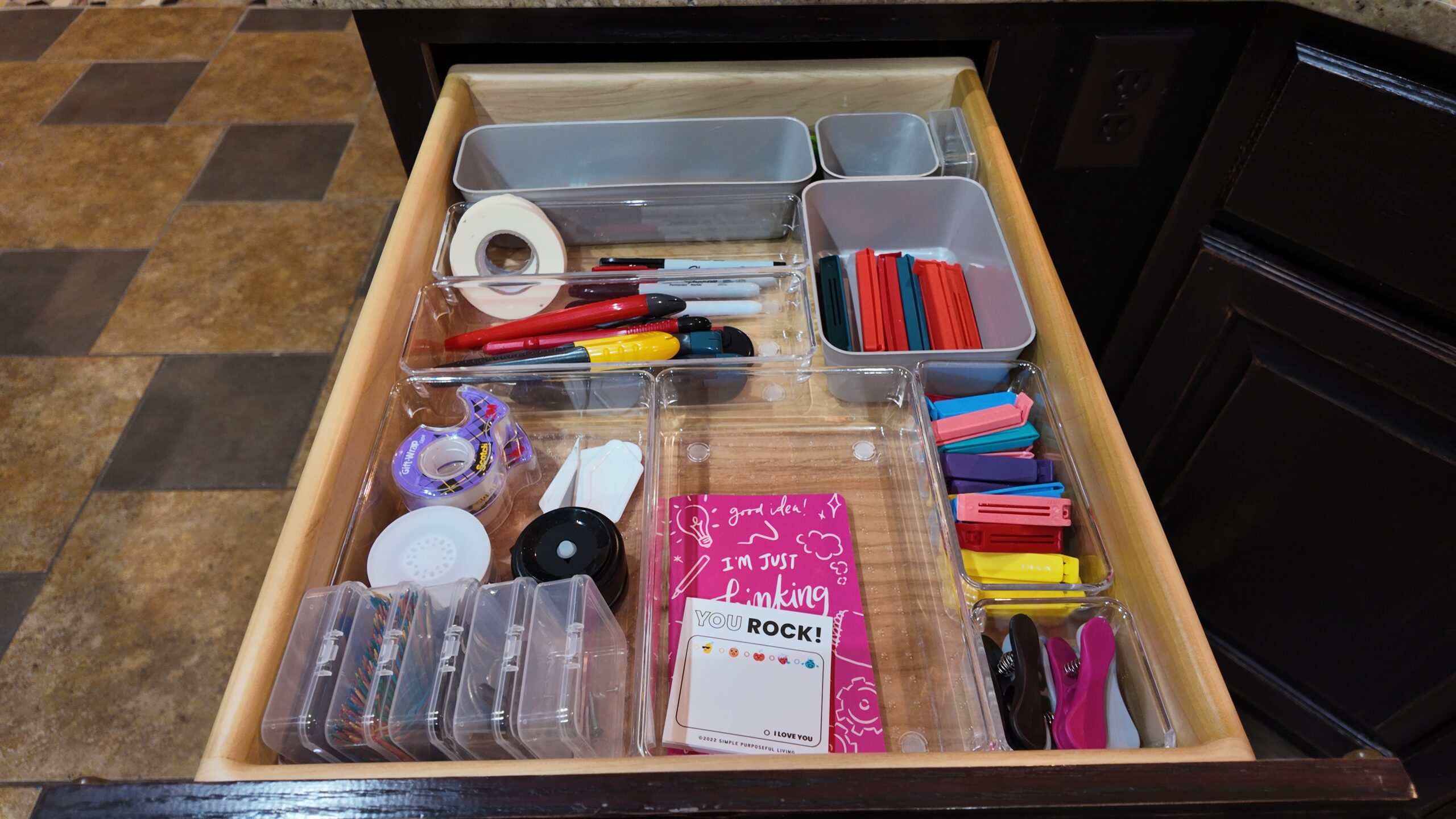
I organized the drawer where the box cutters are supposed to live using bins I already had. The drawer looks great. Honestly, my mood lifted the second I opened it. I no longer feel dread when I pull it open. It’s pleasant, functional, and makes sense.
The bins keep things separated, prevent chaos, and maximize space. Without them, everything would get mixed together and be impossible to find. So yes, organizing helps. But it doesn’t actually solve the real problem.
Why the Problem Keeps Coming Back
Here’s what really happens. I open a package and leave the box cutter on the couch. My husband opens a package and it falls between the cushions. Another one gets left behind furniture in the entryway. One ends up in the storage room, and another somehow migrates to the garage.
And then one day, the beautifully organized drawer is empty again, and I’m back to asking, “Has anyone seen the box cutter?”
Organizing didn’t fail. It just wasn’t enough.
Decluttering Helps, But It Still Isn’t the Whole Answer
default
So then we level up and declutter.
Instead of five box cutters, we keep the best one. Now there’s only one item to manage instead of five, and that is real progress. Decluttering reduces decision fatigue and forces you to deal with problems sooner.
And yes, I really did walk my entire house and gather up all the box cutters. I was genuinely shocked by how many we owned.
But even with just one box cutter, the problem still isn’t solved. If I use it and don’t put it away, it still disappears. So the question becomes, what actually fixes this?
The Real Secret to a Smoothly Running Home
It’s habits. Behavior modification. Daily actions. The unglamorous, boring kind of consistency that doesn’t make for exciting before-and-after photos.
And there are three big reasons most people don’t talk about this:
- It’s boring. Organizing and decluttering are visually exciting because you see transformation. Habit-building looks like nothing happening.
- It’s often disguised. Entire books and research papers exist about habit change, but we don’t always connect them directly to our homes.
- It’s hard. Changing ourselves is harder than changing a drawer.
But habits are the trump card. They matter more than how organized your spaces are or how much stuff you own.
The Habits That Actually Make a Difference in My Home
I am not perfect at these, not even close. But the more I practice them, the smoother things run.
1. The Three Bucket System for Time Management
This is the backbone of how I manage my days. Bucket one holds the top three to five must-dos for the day. Bucket two is appointments. And bucket three is everything else I would like to get done if the day goes smoothly.
This system gives me control back. No matter what happens, I can usually finish bucket one. My planner is built entirely around this, and the more I use it, the better my days flow.
2. The One-Touch Rule
The fewer times I touch something, the better. When mail comes in, most of it goes straight to the trash. The rest gets handled as fast as possible right away. Bills get paid. Events go straight into the calendar with reminders. Nothing sits around waiting to be dealt with again later.
This applies to physical items, ideas, and to-dos. Touch it once, and move it forward.
3. Put It Away When You’re Done
This one sounds obvious, but it’s surprisingly hard. When I’m done using something, the goal is to immediately put it back in its home. This is the habit that actually solves the box cutter problem.
It works best after you’ve decluttered and organized because items need a home first. Otherwise, you’re stuck holding something and thinking, “I don’t know where this goes.”
I’ll be honest. I’m not naturally great at this. And it works best when everyone in the house participates, which is even harder. You can’t force other people to change, but you can set the example and give gentle reminders.
4. The Daily Drop Zone Sweep
SONY DSC
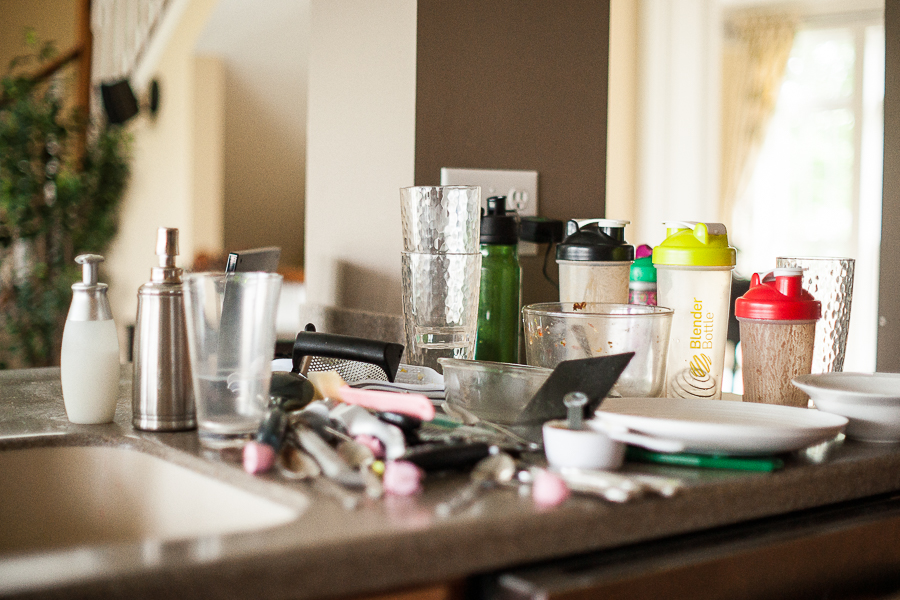
Every home has clutter magnets. For us, it’s the kitchen island, the dining table, an entry table, and bathroom counters– so surfaces, LOL!
Five minutes a day putting those areas back in order makes a huge difference. When a surface is clear, it almost feels wrong to add junk to it. Clean surfaces stay cleaner.
I do this about 40 percent of the time, and when I do, everything feels better.
5. A Solid Walking-In-the-Door Routine
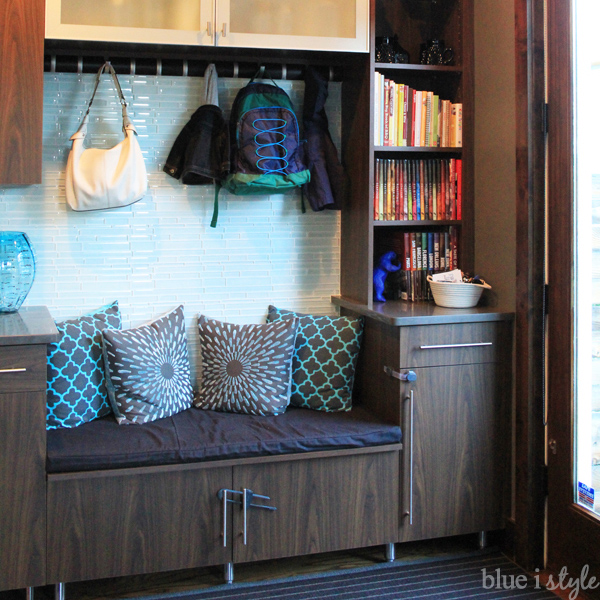
Most clutter happens the second you walk in the door, so this routine matters a lot!
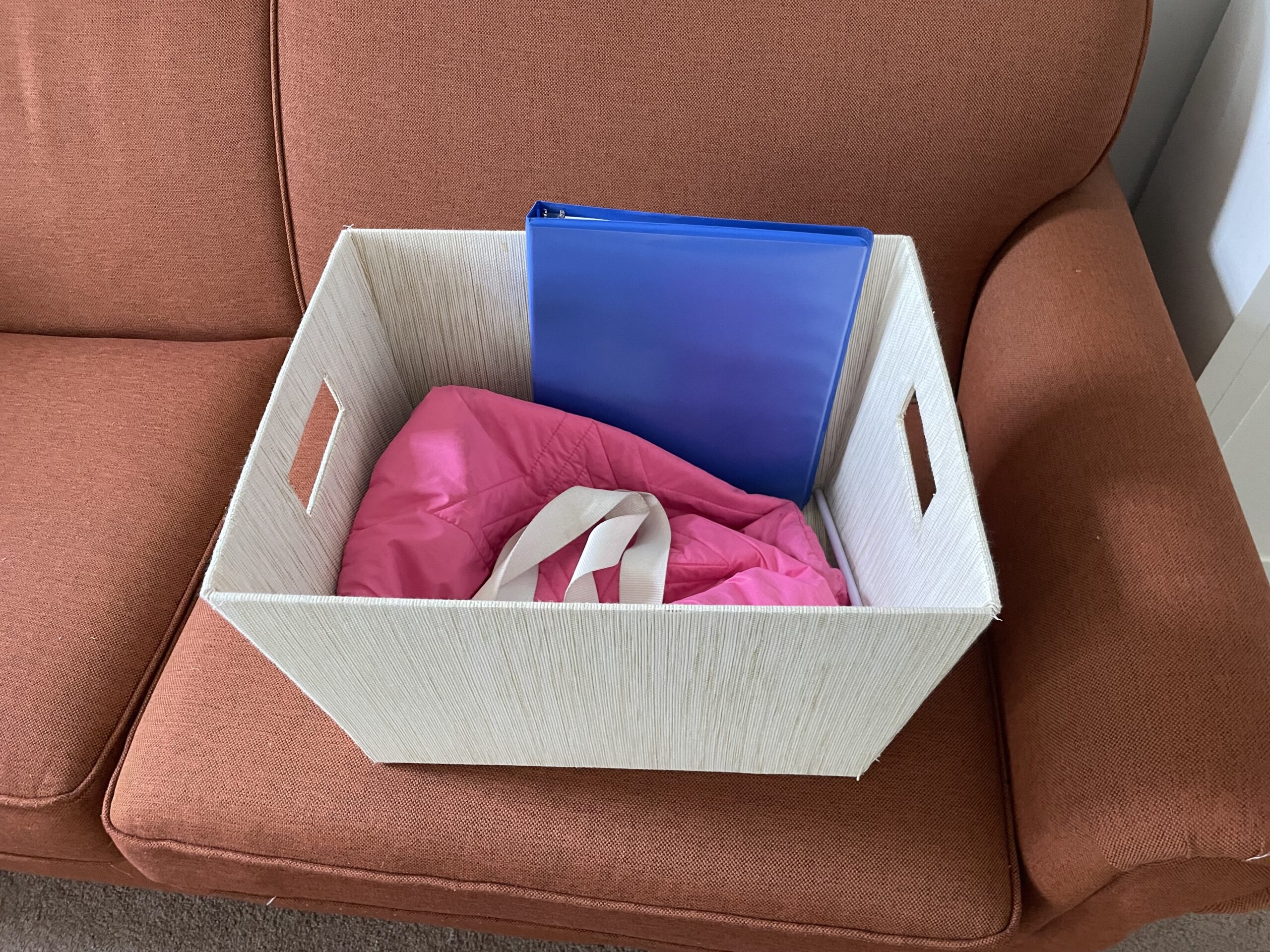
Purse goes on the hook. Shoes go in the cubby. Coat gets hung up. Mail gets sorted immediately.
I’ve made this easier by prioritizing function over aesthetics. Hooks, cubbies, and bins are right where we need them. This is one habit I do about 80 to 85 percent of the time, and it dramatically cuts down on clutter.
6. The End-of-Day Reset
Before bed, I try to make sure dishes are washed, the dishwasher is run if needed, and problem areas get a quick sweep.
When this happens daily, nothing piles up. And when I know it’s coming, I’m better about picking things up throughout the day so I don’t have to deal with it late at night. This one is still a work in progress for me, but it makes a big difference.
7. Weekly Quick Wins With Accountability
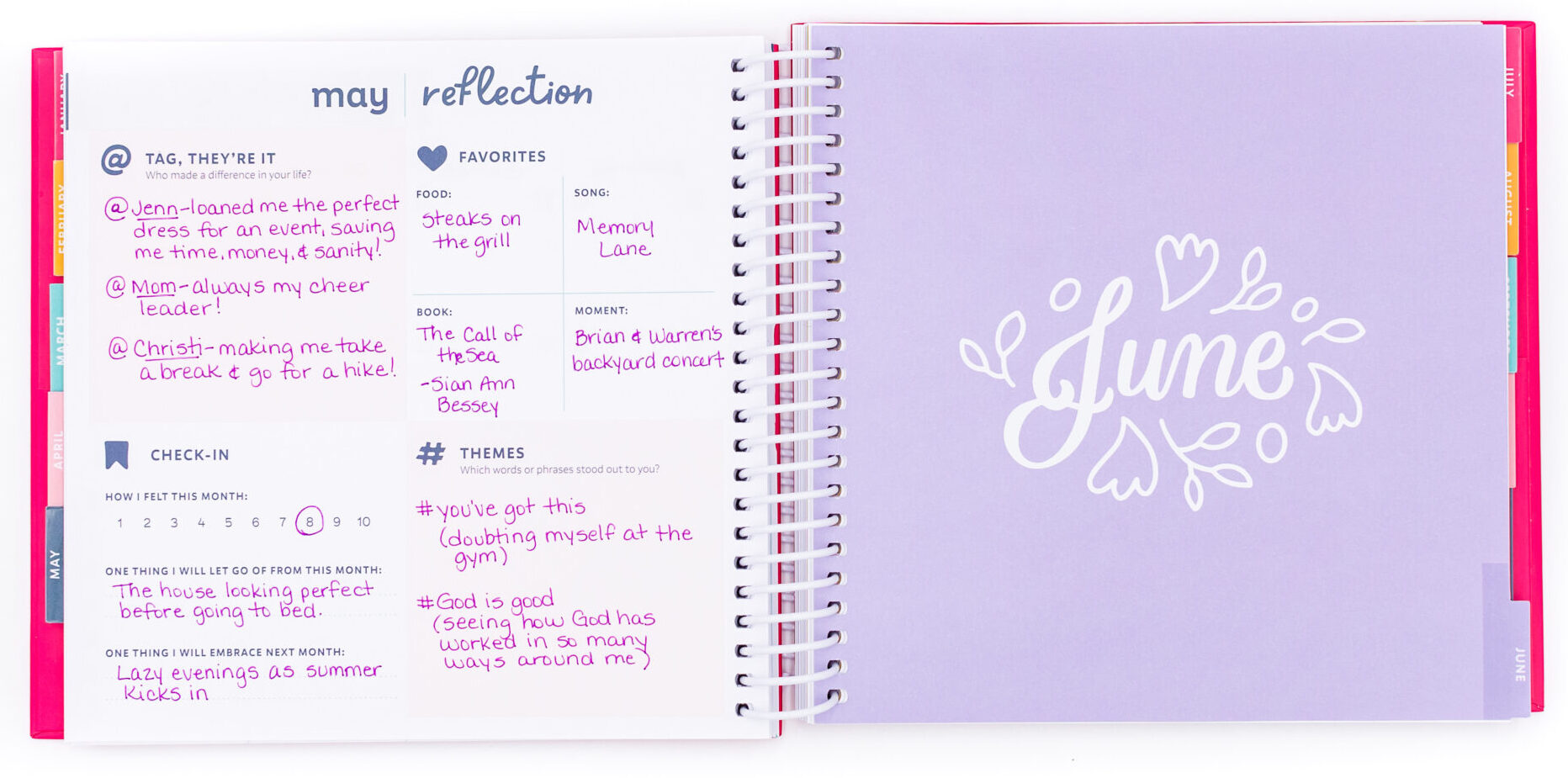
This is the habit I do 100 percent of the time.
Every week inside the Insiders membership, we do a 10-minute Quick Win together. There’s a timer, a plan, and accountability. This is how bigger tasks get done without overwhelm.
If you don’t join us, you can still recreate this by scheduling a time and telling someone you’re going to do it.
How to Actually Stick With Habits
This is the hard part, but a few things help.
First, understand your organizing type. Some people thrive on small daily tasks. Others do better with big projects. I’m a Sunflower, which means big projects are my strength. Knowing this helps me work with myself instead of against myself.
Second, let go of all-or-nothing thinking. Doing something 40 percent of the time is always better than zero percent. Messing up does not mean quitting.
Third, make habits feel positive. Shame and frustration make you avoid things, while positive feelings make you want to repeat them.
Fourth, it’s okay to start and stop. Life happens. Restarting is still progress.
Fifth, build in accountability. Tell someone. Write it down. Track it. Do it with others.
The Real Bottom Line
Decluttering matters. Organizing matters. Habits matter most!
It is not an either-or. You need all three, but habits are definitely the trump card. They will do more for your home than any bin, basket, or organizing system ever will!
If you want to go deeper, start with the Three Bucket System. That is the keystone habit I recommend beginning with, and you can check out this video to learn more about it!



 Copyright 2026, Get Organized HQ.
Dana stiles Says
I loved the organization workshop this past fall. Perhaps one session could be Bible journaling; I don’t know what to do with my Bible notes or word definitions. This seems to fit in with your skills.
Angela Says
A box cutter?
Have been opening my boxes with scissors or knives for decades…. is a box cutter better?
Laura Smith Says
We love to use them. They tend to be a lot sharper than using scissors and knives, and we also use them to cut up boxes for recycling.