

13 Tricks That Actually Get My To-Do List Done (None Are Apps!)
I’ve tried doing just 15 minutes a day. I’ve downloaded productivity apps, bought shiny new notebooks and fancy pens, tried household management routines that people swear changed their lives, made chore charts, color coded everything, offered myself rewards, and tried getting up earlier.
And NONE of it helped me stay consistently motivated and get things done long term.
That doesn’t necessarily mean those strategies are bad. Some of them work incredibly well for other people. The problem was that I kept assuming there was one right way to be productive, and if a system worked for someone else, it should work for me too.
Over time, I’ve figured out a handful of things that actually do help me get things done. Some of these strategies will probably work for almost anyone. Others work specifically because of the way I’m wired, and they might be the exact opposite of what works for you!
And that’s really the point. The goal isn’t to copy my productivity system. It’s to figure out what actually moves the needle for you. Keep reading or check out the video here to see if any of these ideas might be a good fit!
Don’t Just Brain Dump. Do Something With It.
default
Let’s start with a strategy that I think can help almost anyone: the brain dump.
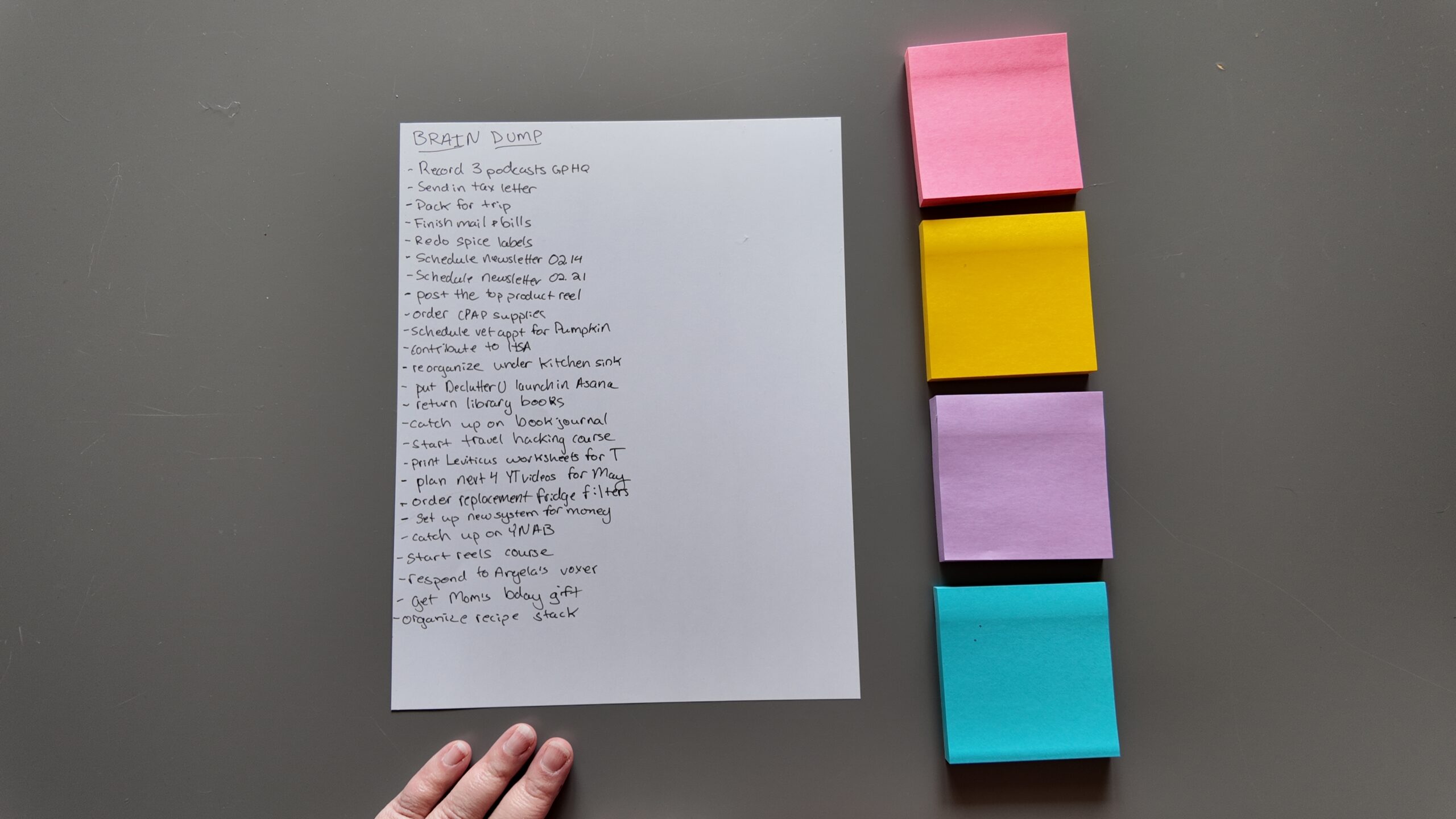
You’ve probably heard this advice before. When your brain is swirling with all the things you need to remember, grab a piece of paper and write down everything you can think of. Getting those thoughts out of your head and onto paper can immediately make you feel better.
But there’s an important second step that often gets skipped.
You have to do something with the brain dump.
If you write down 37 things that are stressing you out, close the notebook, and never look at the list again, you haven’t actually created a system for dealing with any of those things. You may feel better temporarily because they’re out of your head, but eventually your brain realizes nothing is happening with them and starts trying to remember everything again.
Map the tasks onto your calendar. Keep the list somewhere you’ll regularly review it and start crossing things off. Decide which items matter and which ones you don’t actually need to do. The exact method doesn’t matter as much as making sure your brain dump doesn’t become a graveyard for tasks.
Give Yourself One or Two Places to Capture Things
Our brains are terrible storage systems.
I might be standing in the grocery store on a random Tuesday afternoon when a great video idea pops into my head. If I try to hold onto that idea until I get home, part of my brain has to keep repeating, “Don’t forget this. Don’t forget this. Don’t forget this.”
That’s exhausting.
Instead, I have two places where those random thoughts can go. I have one digital spot, which is a list in the Reminders app on my phone, and one physical spot, which is a notebook that sits on my desk.
That’s it.
I don’t have ideas scattered through five apps, seven notebooks, random scraps of paper, and sticky notes I can’t find. If I know I wrote something down, there are only two places I need to look.
The other critical piece is that I review both of those places every week. Capturing something only relieves the mental load if you trust that you’ll eventually come back and deal with it.
Stop Calling Everything High, Medium, and Low Priority
We’ve all heard the advice to prioritize a to-do list by labeling things high, medium, and low priority.
That doesn’t work particularly well for me.
If I wrote something on my list, I probably think it’s important. So when I try to put something I care about into a category called “low priority,” my brain immediately starts arguing with me.
I’ve found it much more helpful to use these categories:
- Non-negotiable
- Really important
- Regular important
- Bonus
That wording forces me to be much more realistic. Something can still be important without being something that absolutely has to happen today.
I use a similar system when I’m preparing for a trip. My highest category becomes “I can’t leave without doing this.”That might include packing my passport, checking into my flight, or taking care of something that truly has to happen before I walk out the door.
My next category is “Life gets harder if I don’t.” Cleaning food out of the refrigerator before a long trip might fit here. Technically, I can leave without doing it, but I’m going to regret that decision when I come home.
Changing the language helps me make real decisions instead of looking at a giant list where everything feels equally urgent.
Keep Your Reminders List Thin
I used to put all of my to-dos into the Reminders app on my phone. It sounded like a great system because everything was in one place and the tasks could even show up on my calendar.
Except there were way too many of them.
I’d get to the end of the day and start pushing unfinished tasks to tomorrow. The next day I’d push more tasks forward. Eventually the list became so overwhelming that I stopped looking at it for two or three weeks.
At that point, it wasn’t helping me remember anything because I didn’t trust myself to look at it.
Now I’m incredibly selective about what gets an actual dated reminder. I only use them for things that must be completed by a particular date and can’t reasonably wait until my next Clean Slate Day.
That means I usually have only two to five reminders during an entire week. When one pops up, I notice it and I’m much more likely to actually do it.
Try the Two-Minute Rule

This one works well enough for me that I keep using it, although it’s definitely not foolproof.
When I really don’t want to start something, I tell myself I only have to do it for two minutes. I can even set a timer if I need to.
Often the hardest part of a task is simply generating enough activation energy to begin. Once I’ve been doing it for two minutes, I’m usually invested enough that I want to keep going.
But there’s an important part of this rule: if I genuinely still hate it after two minutes, I let myself stop.
If I constantly tell myself, “You only have to do this for two minutes,” but secretly know I’m going to force myself to continue for an hour, my brain will stop believing me. I want to be able to trust that two minutes really can mean two minutes.
Plan Your Day With the Three Bucket System
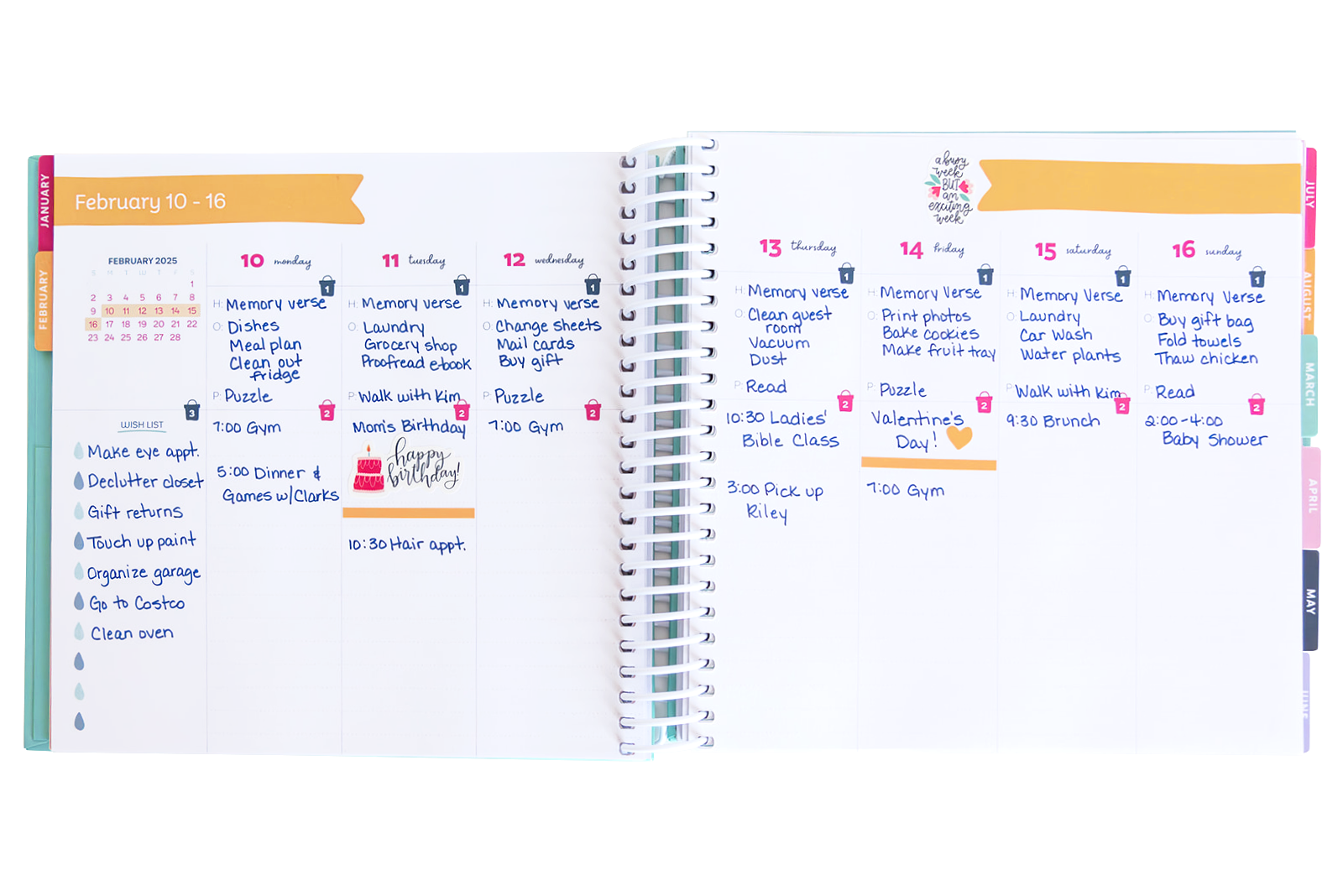
I’ve been using my Three Bucket System for years, and it has completely changed how I plan my days.
It’s really simple:
- Bucket 1: Your top three to five priorities
- Bucket 2: Your appointments
- Bucket 3: Everything else, which is your wish list
The biggest difference is Bucket 3. Instead of writing a huge to-do list and telling yourself all of it needs to happen, you’re accurately acknowledging that some things would simply be nice to accomplish.
I want to complete Bucket 1. I need to show up for Bucket 2. If I get to Bucket 3, wonderful.
Having that distinction helps me feel much more in control of my day instead of constantly feeling like I’m failing because there are still unchecked boxes on an unrealistic list.
Find a Mantra That Actually Works for You
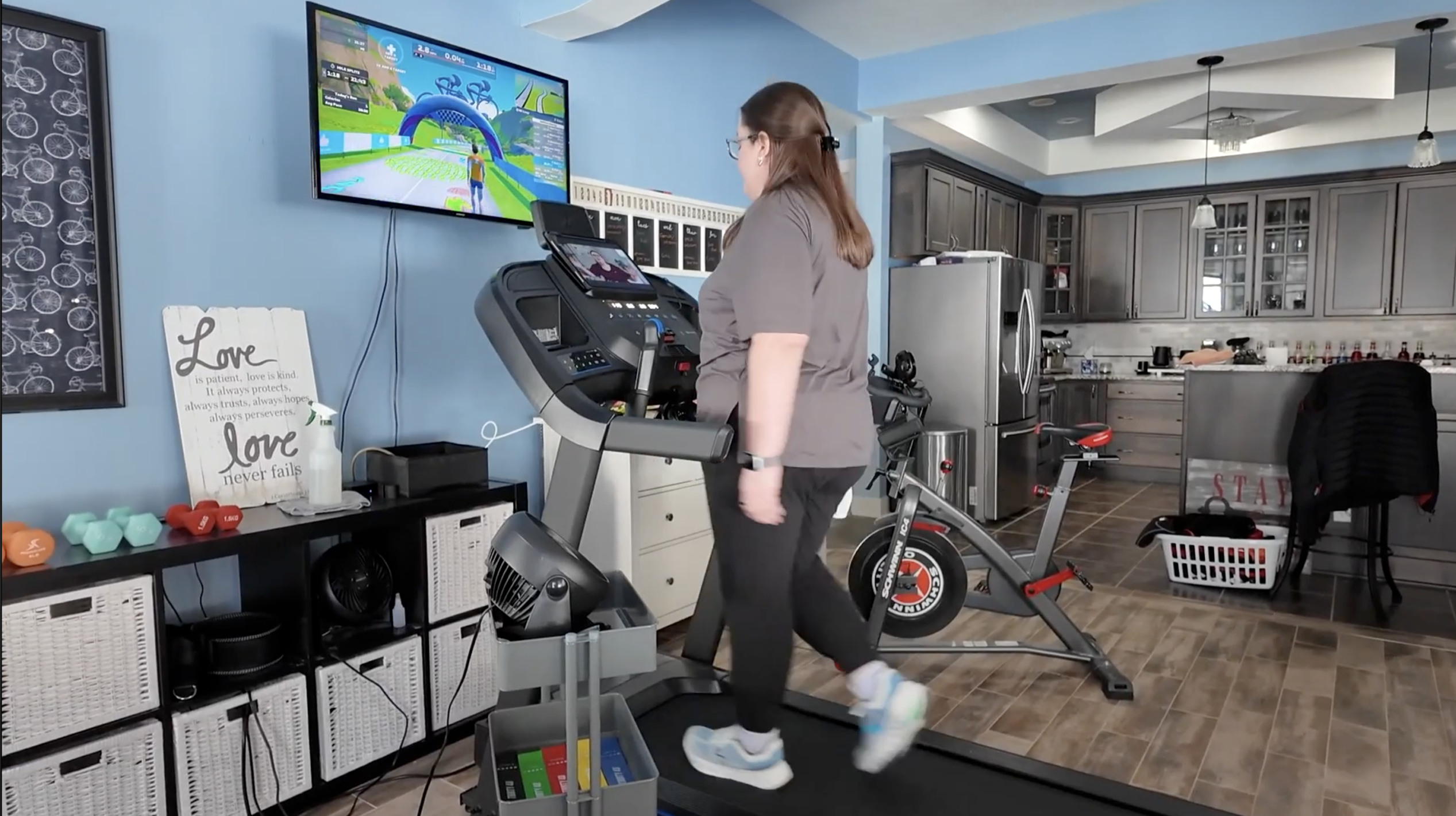
If you know me, you know I’m a very numbers-and-logic-oriented person. I’m not particularly into mantras.
And yet, somehow, I have one.
Mine is:
You don’t have to like it. You just have to do it.
I say this to myself when I’m in the middle of something I really don’t want to do. Sometimes I literally say it out loud.
One of the times I use it most is while running. Maybe I’m 35 minutes into a run, breathing hard, and I really don’t want to do the last ten minutes. I’ll remind myself that I don’t have to enjoy those ten minutes. I just need to do them.
There’s something surprisingly freeing about realizing that not everything needs to feel good.
Sometimes when something is unpleasant, our brains immediately react as though there’s a crisis. This is terrible. I hate this. I can’t do this.
But we actually can do plenty of things we don’t particularly enjoy. When I stop making the unpleasantness itself into a big problem, the task usually becomes easier.
Your mantra doesn’t need to be mine. Find something that speaks to the particular excuses or thought patterns that tend to stop you.
Know Whether You Need to Eat the Frog or Build Momentum
Now we’re getting into the strategies that work specifically because of how I’m wired.
You’ve probably heard the phrase “eat the frog,” which is the idea of tackling your worst task first.
That works incredibly well for me.
Interestingly, the task I do first isn’t necessarily the most important thing on my list. It’s usually the thing I’m dreading the most.
Maybe I need to schedule a doctor’s appointment. Maybe I have to communicate something to someone that I know they won’t want to hear. Whatever task is hanging over my head, I want to get it out of the way.
Once I do, I get a huge burst of relief and energy that carries me through the rest of my list.
But some people work exactly the opposite way. Starting with the worst task makes them want to avoid the entire list. They’re much better off doing a couple of easy things first, building momentum, and then tackling the harder task.
Neither approach is better. You need to notice which one actually gets you moving.
Sometimes I Need to Raise the Stakes

Most productivity advice tells you to start small.
Apparently, my brain didn’t get the memo.
I often function better when I raise the stakes.
When I started running about a year ago, I didn’t tell myself I was going to walk or run a mile a few times a week and see how it went. I signed up for a half marathon.
That’s 13.1 miles.
Suddenly I was invested. I had a big goal, a deadline, and a reason to follow my training plan. I hardly missed a training session for an entire year. Once I finished that half marathon, I signed up for another one because I knew having that bigger goal would keep me motivated.
I sometimes do the same thing with work. Why film one video when I could set a goal to film seven in a week?
This isn’t advice that everyone should follow. For some people, setting a huge goal would be so overwhelming that they’d never begin. But I’ve learned that if the stakes feel too low, I struggle to care. Once they feel high enough, I’m all in.
Knowing that about myself allows me to intentionally create situations that make me more likely to follow through.
You Might Not Be a 15-Minutes-a-Day Person
This is one I really want people to hear because so much home management advice tells us to work on things a few minutes at a time.
That is excellent advice for some people.
If you declutter a junk room for 15 minutes every day, eventually that room will be decluttered. It doesn’t matter whether you finish it in one weekend or slowly work through it over a couple of months. Either way, the room gets done.
But personally, I don’t function particularly well in 15-minute chunks.
At the 15-minute mark, I’m just getting started. I’m finally invested. I’ve built momentum, I’m working efficiently, and now you want me to stop?
I’d much rather find a two-hour block and really dig into the project.
I’ve seen the same divide with other people. Some naturally thrive on small, consistent sessions. Others do much better with bigger chunks of focused time.
Neither type gets to work according to their preference all the time. I may love batching, but I can’t batch all of my dirty dishes and wash them one Saturday a month. Some things simply need to happen daily.
But whenever you have a choice, understanding how you naturally work can make a huge difference.
Use a Sticky Note Wall When You Need Extra Motivation
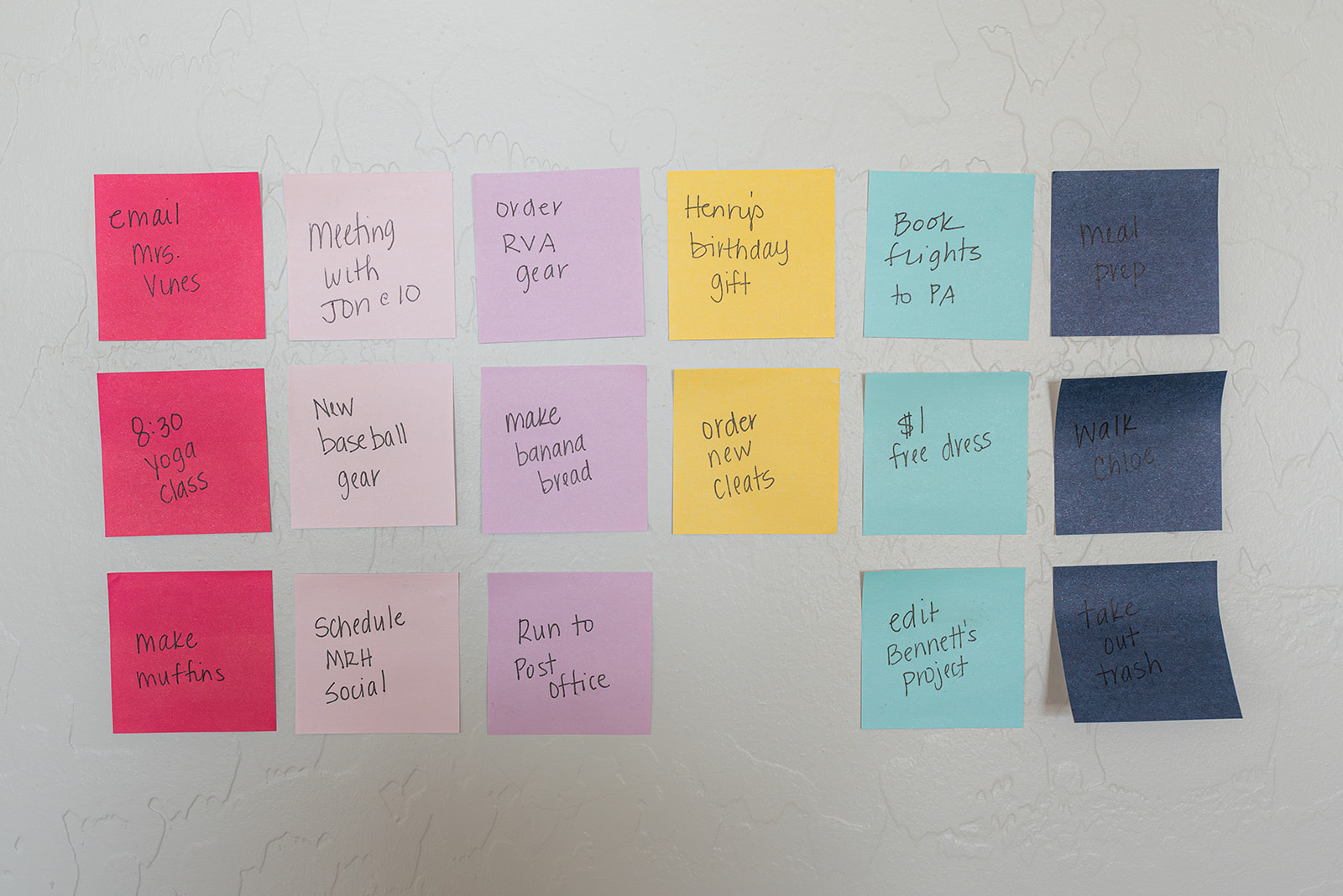
Every once in a while, when I need a motivation boost, I create a sticky note wall.
I’ll write individual tasks on sticky notes and create a “not done” section and a “done” section. As I finish something, I physically move the sticky note across the wall.
It’s visual. It’s tactile. And for whatever reason, moving those little notes is incredibly satisfying.
If I’m working on one particular task, I might even pull its sticky note off the wall and stick it directly onto my computer. That’s the thing I’m working on until it’s finished. Then I get to move it into the done section.
For a bigger project, I don’t write the entire project on one sticky note. Each note represents something I can realistically accomplish in one session, usually anywhere from about 30 minutes to a couple of hours.
I also don’t use this system constantly. I probably do it two to four times a year because I think it would lose some of its novelty if I had sticky notes covering my wall every day.
Sometimes I’ll create one a few weeks before a trip when I want to wrap up work projects, home projects, and everything that needs to happen before we leave. Other times I use it when I’m just feeling blah and need something to make getting things done a little more fun.
Create the Right Kind of Accountability
Accountability is another strategy where the details matter.
I’m very socially motivated. If I tell you we’re meeting for coffee at 10:00 a.m., I’m going to be there. If a group of people is expecting me to show up somewhere, I’ll show up.
But simply telling my husband, “I’m planning to do this at 7:00 tonight,” doesn’t have the same effect. He isn’t actually waiting for me or depending on me to be there, so there isn’t enough accountability to change my behavior.
That’s one of the reasons Clean Slate Day has worked so well for me.
I take all those annoying tasks that constantly hang over my head and put them onto one list. That might include:
- Going through mail and paperwork
- Catching up on important personal emails
- Checking tax portals
- Emailing my accountant
- Making returns
- Making phone calls
- Scheduling appointments
- Taking care of other annoying administrative tasks
Most weeks, I schedule a block of time to tackle them. I go live inside GOHQ Insiders at the beginning, share what’s on my list, and then go get to work. At a specific time, I come back live and report what I accomplished.
Now people are expecting me.
I really don’t want to come back a few hours later and say, “Well, I didn’t feel like making that phone call, so I watched Netflix instead.”
That little bit of social pressure is enough to get me moving, and knowing other people are tackling their own annoying tasks at the same time makes the whole thing feel much better.
Before Clean Slate Day, these tasks were constantly hanging over my head. I felt guilty for not doing them, and important things were too easy to put off. Now I’m much more on top of them, and every time I follow through, it gets a little easier to show up again the next time.
Treat Every Productivity System Like an Experiment

This might be the most important thing I’ve learned from trying so many different productivity strategies.
Everything is an experiment.
If you find a household routine online that looks interesting, try it. Print it out. Follow it for a while. But don’t go into the experiment thinking, “This is the system that works, and if I can’t stick with it, there’s something wrong with me.”
Instead, get curious.
Ask yourself:
- How long did I stick with it?
- Which parts worked really well?
- Which parts didn’t?
- When I stopped, why did I stop?
- What made it easier to follow?
- What consistently made me avoid it?
- What can I take from this experiment into the next one?
Before I created Clean Slate Day, for example, I tried dealing with my dreaded administrative tasks for 15 minutes at the end of every workday.
It lasted about two days.
On the third day, I had a headache. No one was expecting me to do it. I hated the task. So I told myself I’d do it tomorrow.
Did I?
Nope.
I also realized I hated knowing that I had to face those annoying tasks every single day. That system was never going to work well for me.
But that wasn’t a failure. It gave me incredibly useful information.
I learned that I prefer batching those tasks. Stronger accountability really helps me. I learned that doing them every day makes me dread them more, not less. Eventually, those lessons helped me create Clean Slate Day, which has worked far better for me.
For someone else, the exact opposite might be true. Knowing you only have to deal with those tasks for 15 minutes could make them feel manageable, and doing a little bit every day might be exactly what keeps them from piling up.
That’s why the goal isn’t to find the universally perfect productivity system.
Stop Trying to Make Yourself Fit the System
If you’ve tried planners, routines, apps, rewards, color coding, habit trackers, 15-minute sessions, morning routines, and every other productivity strategy and you still struggle to get things done, that doesn’t automatically mean you need more discipline.
You may simply be trying to force yourself into systems that don’t match the way you naturally operate.
Look back at the times when you’ve been unusually productive. What was different? Did you have a deadline? Were other people counting on you? Did you work in one big chunk? Or start with easy wins? Did you tackle the hardest thing first? Were you using something visual? Did you have a really exciting goal pulling you forward?
Then look at the systems that fizzled out. Instead of beating yourself up for quitting, figure out why you quit.
Every success and every failed system gives you another piece of information about how you work.
The more you understand those patterns, the less time you have to spend trying to become the kind of person who thrives on someone else’s perfect routine. You can start building systems around the person you actually are.
And in my experience, that’s when getting things done finally starts getting a whole lot easier.




 Copyright 2026, Get Organized HQ.