

Why Sticky Notes Work BETTER Than To-Do Lists
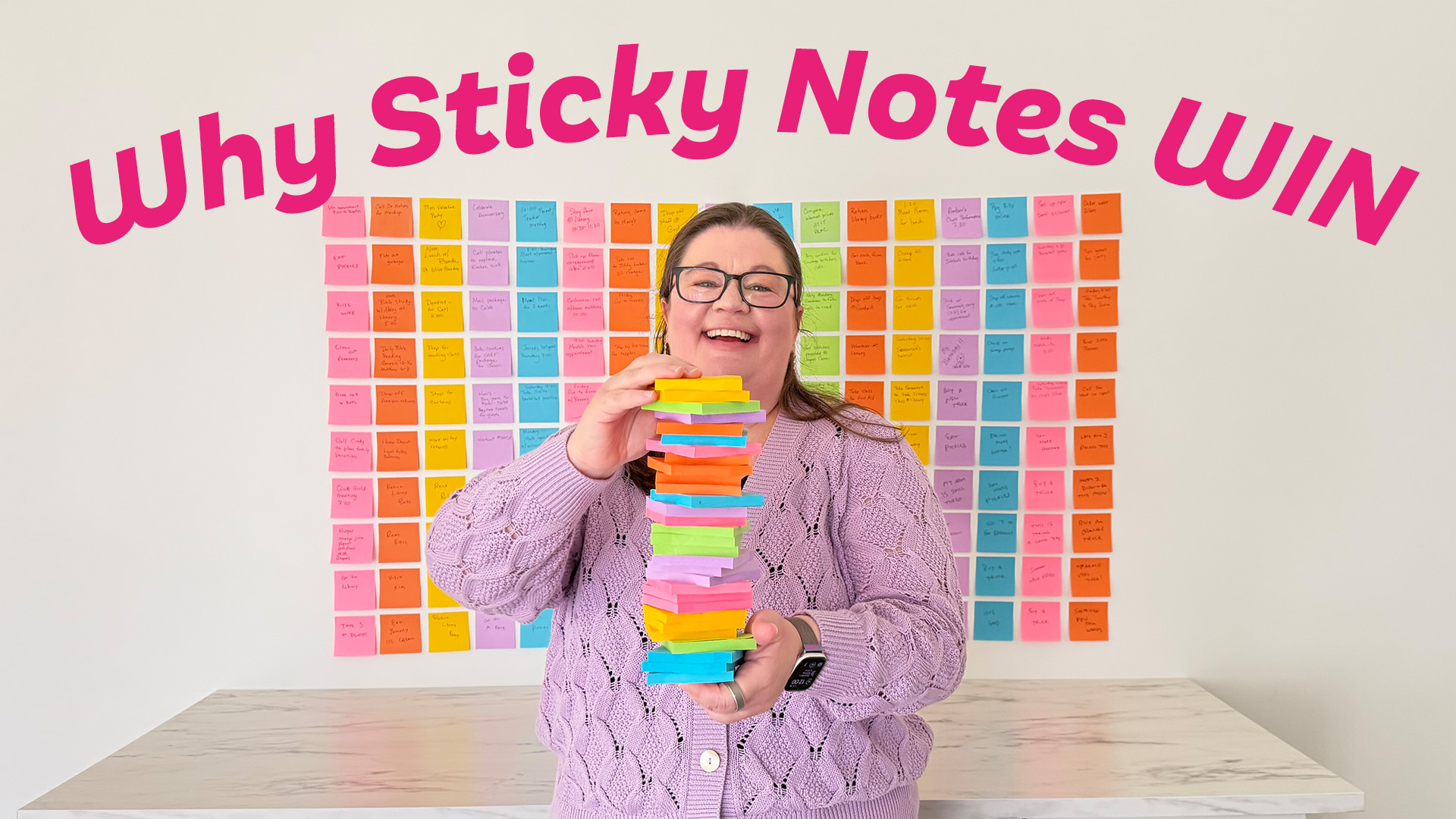
When your to-do list feels overwhelming and even your planner stops working, it’s time for a reset! In this post, I’m sharing my favorite sticky note productivity method that helps you focus, prioritize, and actually finish tasks without feeling stressed or behind. Keep reading, or check out the video here to learn more!
When Your To-Do List Feels Overwhelming (And Your Planner Isn’t Helping)
If you’ve ever opened your planner, looked at your to-do list, and immediately felt overwhelmed, you’re not alone. Sometimes the problem isn’t that you don’t have a system. It’s that your brain needs something different.
When that happens, I reach for my secret weapon: Sticky notes!
Yes, plain, everyday sticky notes. I’ve used this method for years, and it has helped me break out of countless productivity ruts when nothing else felt like it was working.
Why Sticky Notes Work Better Than a Traditional To-Do List
Sticky notes wake your brain up. They are visual, hands-on, and engaging in a way a long written list often isn’t. That small shift can make a big difference when motivation is low.
Many of us are visual learners. We like seeing progress and physically interacting with what we’re working on. Sticky notes give you that tactile experience. You can touch them, move them, and watch your progress build in real time.
But the biggest benefit is focus. Instead of staring at a long list of unfinished tasks, you can grab one sticky note and focus on a single task until it’s done. No distractions, no overwhelm, just one clear next step.
A Quick Heads Up Before We Start
What I’m sharing today is one method from my Sticky Note Productivity Guide, and it’s the very first one. There are several methods in the guide, and I don’t recommend trying them all at once.
This is meant to layer onto what you’re already doing, not replace your entire system. Pick one method, use it when you need an extra boost, and build from there.
Step One: Do a Full Brain Dump
default
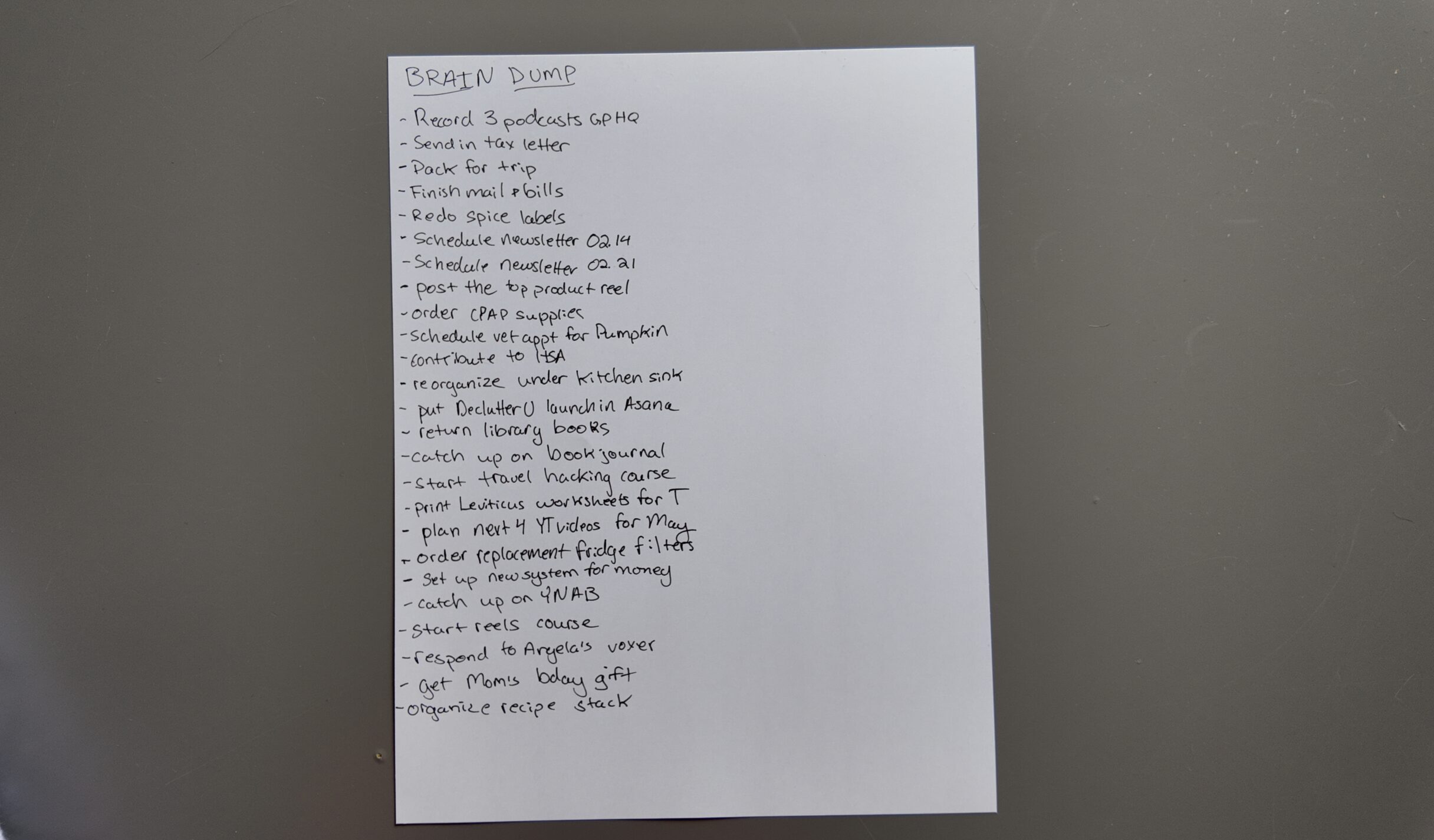
Start by grabbing any piece of paper and doing a full brain dump. Write down every task, reminder, and responsibility that’s taking up space in your head.
Don’t edit yourself. Don’t think about timing, priority, or how you’ll get it done. The goal is simply to get everything out of your head and onto paper so you’re not carrying it all mentally.
Step Two: Create Priority Levels With Color Coding
default
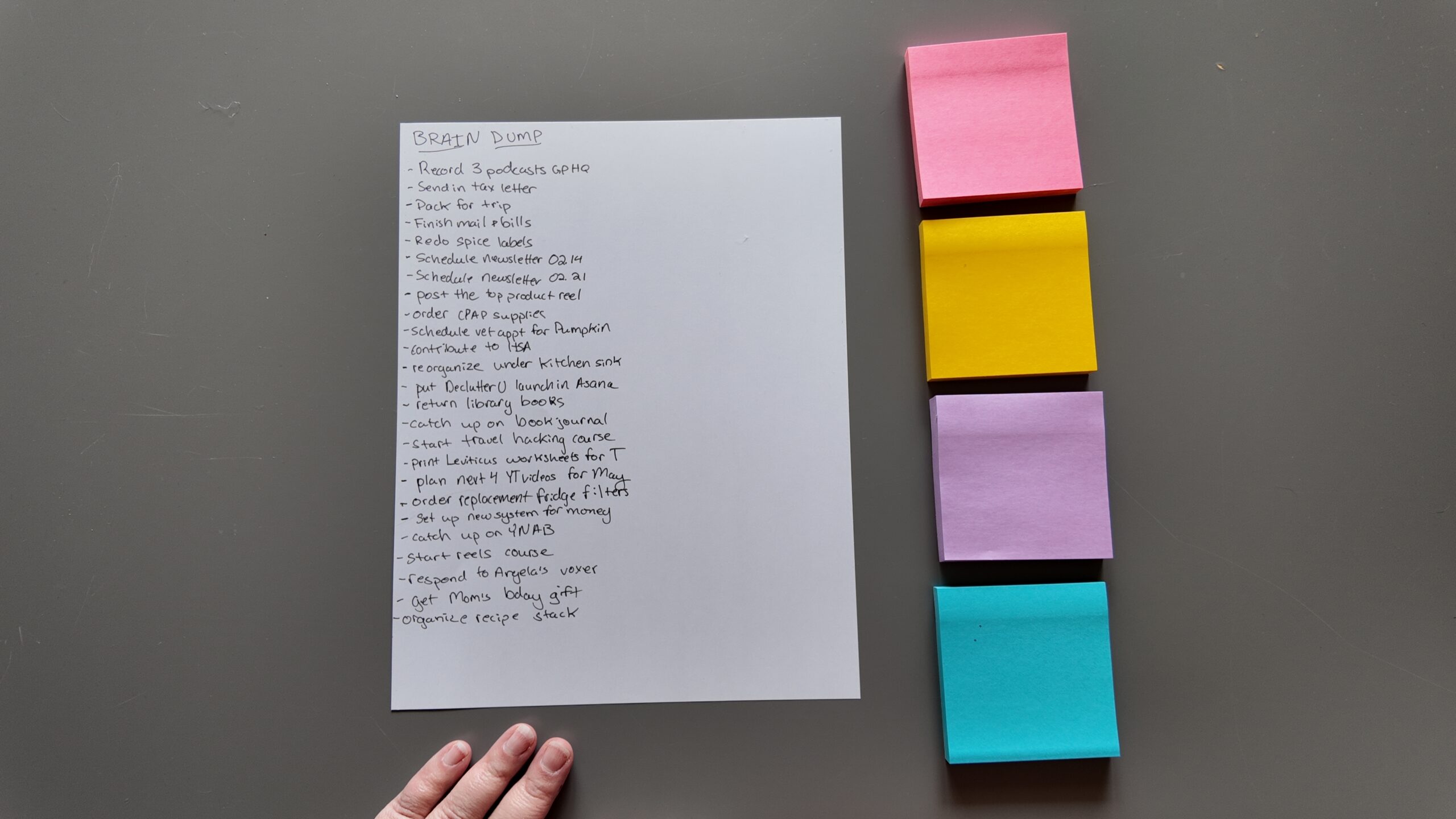
Next, assign priority levels using different sticky note colors. You can choose whatever system works for you, but here’s what I use: Priority 1, Priority 1.5, Priority 2, and Priority 3.
Most people will be fine with just 1, 2, and 3. I use 1.5 for tasks that feel important but don’t quite belong in the top tier. If you’ve ever struggled to decide whether something is truly urgent, this middle category helps.
To stay organized, I write the priority number at the top of each sticky and keep one example of each color nearby as a reference. If the stickies will be up for a while, a little washi tape keeps the edges from curling.
Step Three: One Task Per Sticky Note
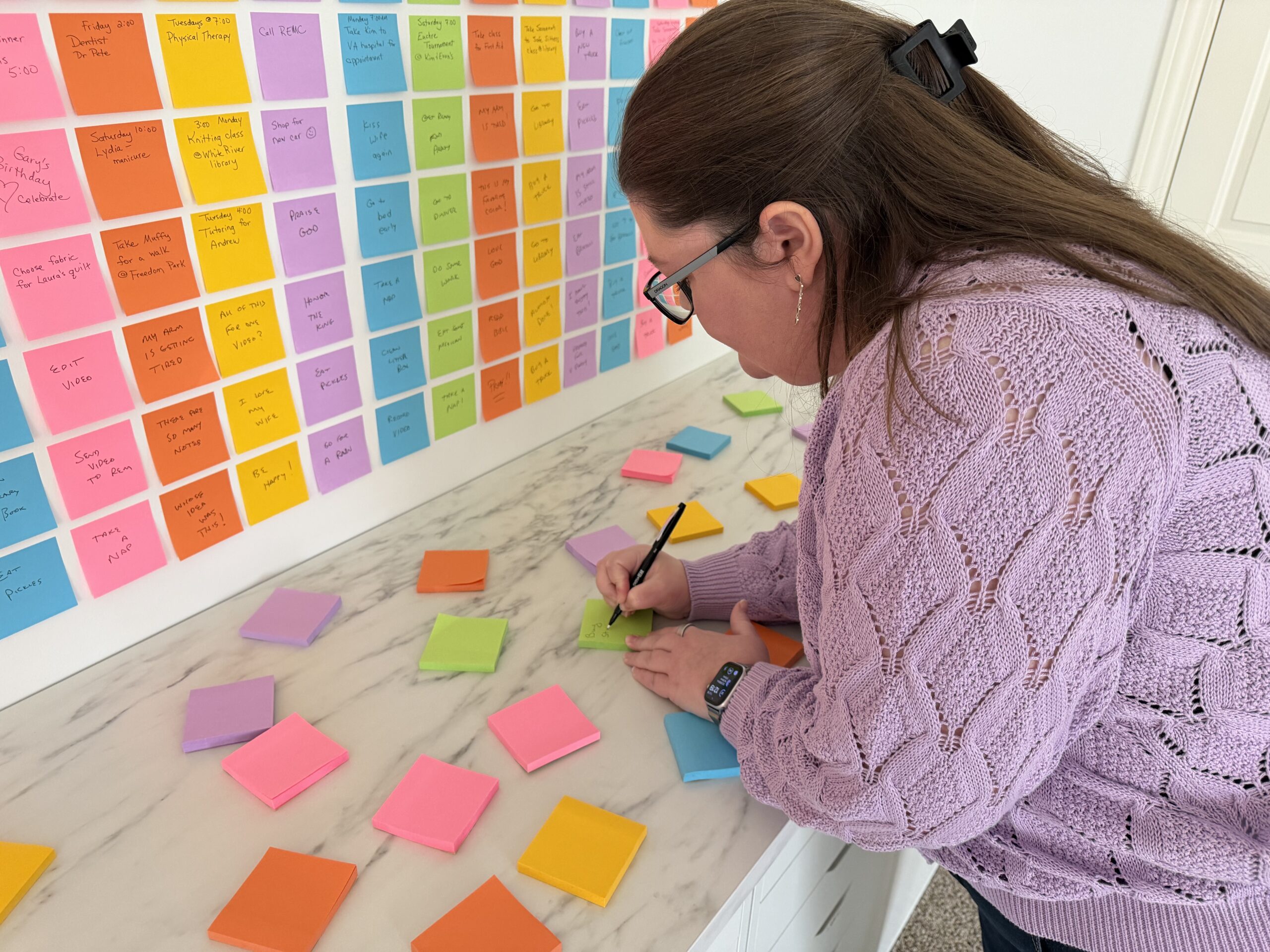
Now take your brain dump and start writing tasks onto sticky notes, one task per note, using the color that matches its priority.
Each sticky should represent something you can realistically finish in one sitting. Large projects need to be broken down into smaller steps. For example, recording three podcast episodes becomes three separate sticky notes. Hosting a garage sale becomes several tasks, like choosing a date, pricing items, and writing listings.
If you can’t complete it and move the sticky when you’re done, it needs to be broken down further.
How to Decide What Gets Top Priority
This is where many people get stuck. It’s tempting to make everything a top priority, but if everything is urgent, nothing really is.
Top-priority tasks are things that must happen or have real consequences if they don’t. Packing before a trip or paying a bill before a late fee hits are clear examples.
Other tasks may be important, but timing matters. Getting ahead on taxes in January is helpful, but it’s not urgent yet. A few days before the deadline, it becomes a true top priority.
That’s why I like having a 1.5 category. Priorities two and three are for things that would be nice to do someday. Some of those may never happen, and that’s okay.
Step Four: Put the Stickies on the Wall
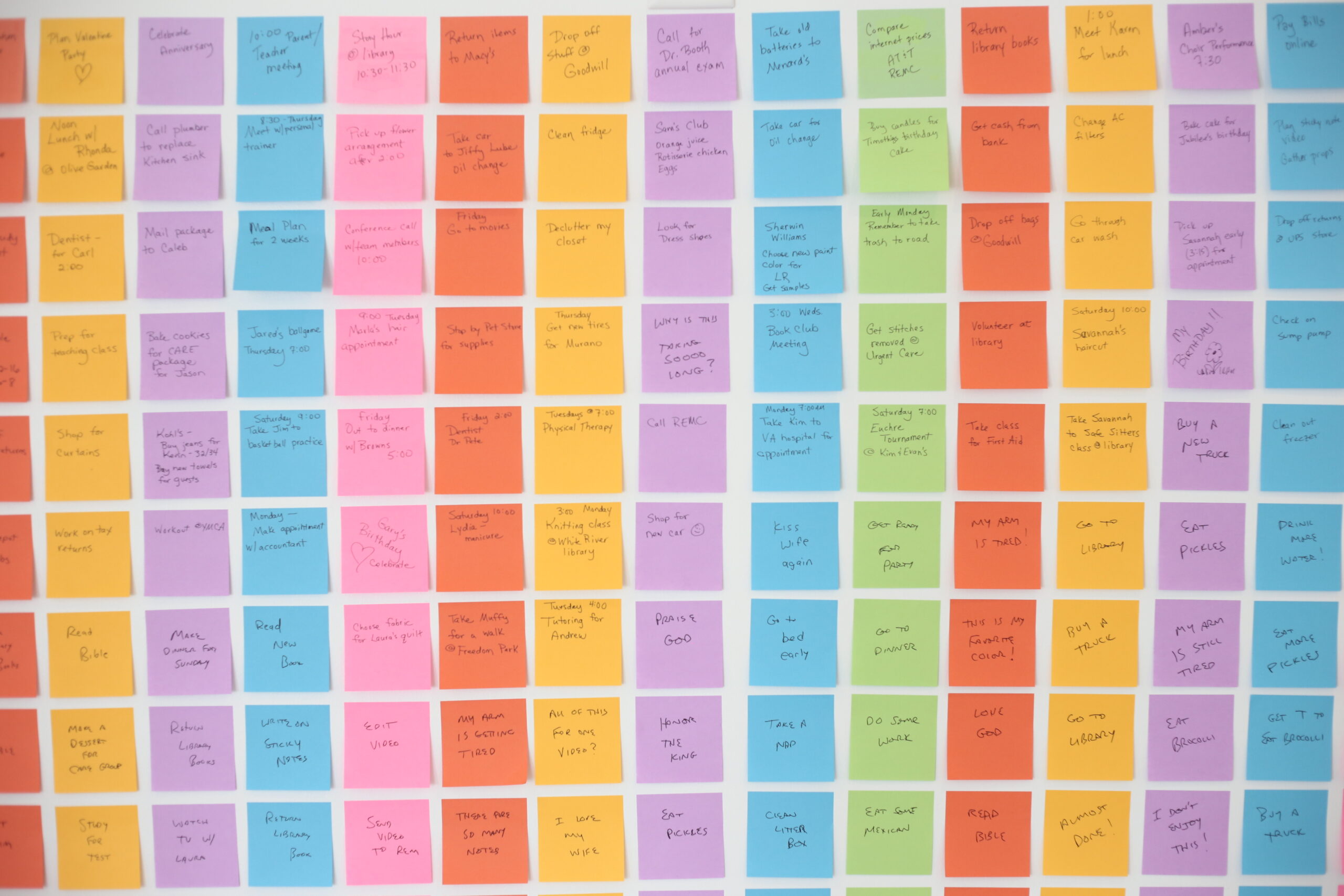
Once everything is written, put your sticky notes on the wall. Keep it simple. You just need a “to-do” area and a “done” area.
They can be side by side or across the room. You can group them by priority or mix them together. This doesn’t need to be fancy to work.
Step Five: Focus on One Sticky at a Time
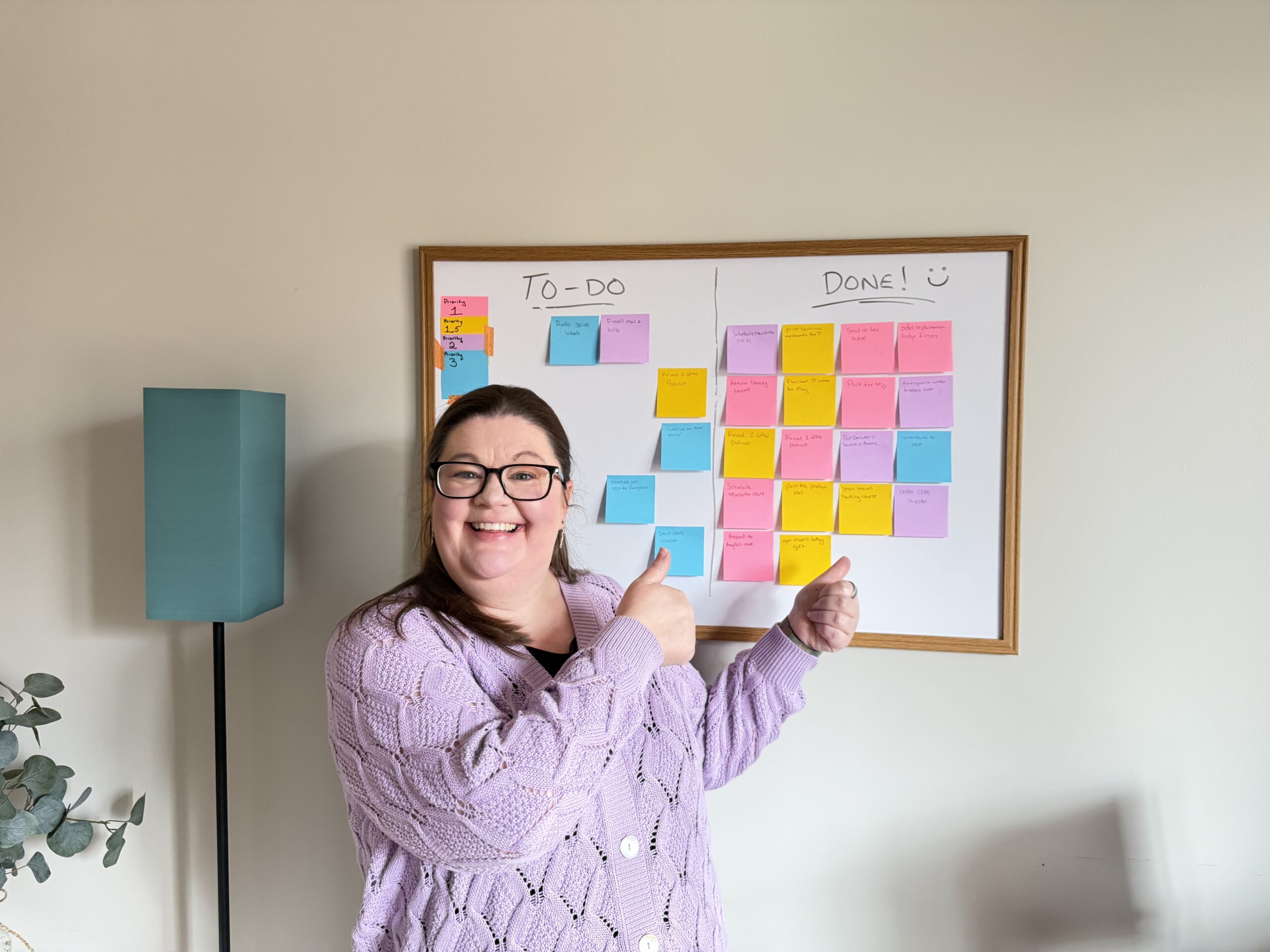
When it’s time to work, grab one sticky note and move it somewhere visible where you’re working. This signals to your brain that this is the task you’re focusing on right now.
Stick it on your computer, your notebook, or even the bathroom door if you’re cleaning. Work on that task until it’s finished, then move the sticky to the done side.
This one-task focus is incredibly powerful. It reduces distractions and helps you actually finish things instead of jumping from task to task. Watching the done side grow is motivating, and kids love this method too.
A Few Rules That Make This Method Work
Don’t keep adding new tasks to the wall nonstop, or you’ll never feel finished. Set a clear time frame, such as before a trip, before an event, or for a specific week or month.
The goal is not to finish everything. I rarely do. The goal is to make sure your top priorities get done.
When the time frame ends, leftover stickies don’t automatically carry over. You get to decide what still matters and what doesn’t. Letting go of tasks that are no longer important is part of the process.
Want More Support Like This?
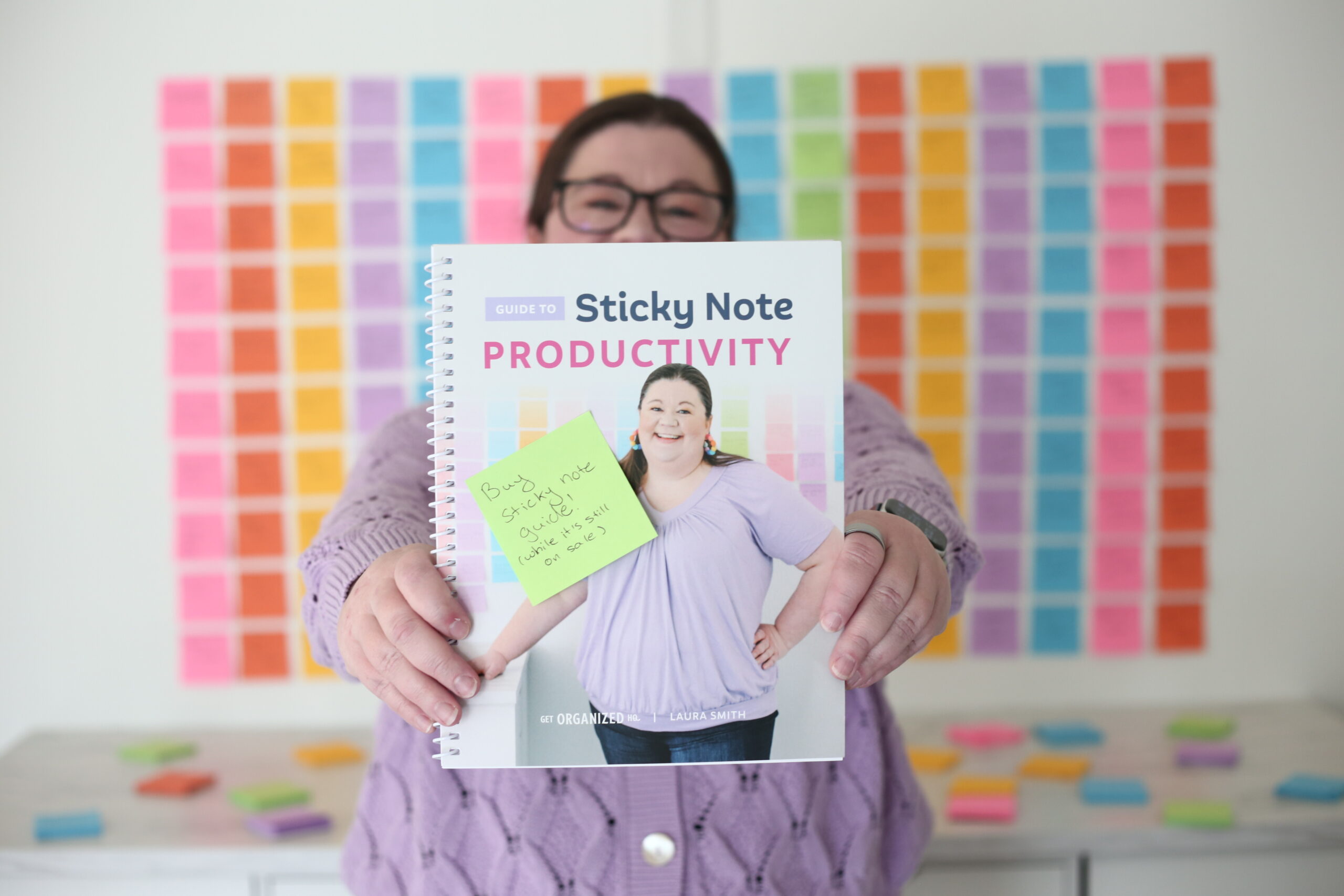
If this method resonated with you, you’ll love my Sticky Note Productivity Guide. It walks through this method and several others, with plenty of photos so you can see exactly how everything works.
And if you enjoy learning simple, practical systems like this, the Get Organized HQ Insiders might be a great next step. It’s where I share ongoing trainings, resources, and real-life organizing strategies to help your home and your time run more smoothly. The guide may even be on sale right now!
Happy organizing,
Laura 💛




 Copyright 2026, Get Organized HQ.