

Why 15-Minute Cleaning Routines Don’t Work for Everyone
If you’ve tried all the “15 minutes a day” cleaning routines and still feel like you’re always cleaning—or like your house is a disaster zone—this is for you!
Before you assume this is going to be another lecture about trying harder, being more disciplined, or finally “getting it together,” let’s clear something up. If those 15-minute routines worked magically for everyone, they would have worked for you by now. The fact that they haven’t does not mean you’re lazy, undisciplined, or bad at homemaking.
Let’s talk about what’s really going on. If you're feeling alone in this, keep reading, or check out the video here!

The Internet Makes It Look Effortless
Spend five minutes online and you’ll see headlines like:
-
“How I Keep My House Spotless in Just 12 Minutes a Day”
-
“My Simple Cleaning Routine (I Never Clean All Day!)”
-
“I Decluttered 50% of My Stuff and Now My Home Stays Tidy Automatically”
For some people, these routines genuinely work. They:
-
Notice mess instinctively
-
Clean it up without much mental effort
-
Feel a quick sense of reward
-
Move on without overthinking it
But for other people, those same routines feel exhausting and never-ending—like you’re constantly working and never getting ahead.
The difference isn’t character. It’s cost.
Let Me Explain This With Something Totally Different
A couple of years ago, I had emergency surgery. After that, I got serious about my health. I started tracking my steps, then walking more intentionally, eventually working up to three miles a day. Not long after that, I signed up for a half marathon—13.1 miles—and began following a structured run-walk training plan.
My husband was doing the same thing. He’s been a runner for years. We were both consistent. Both disciplined. Both following thoughtful plans.
And yet his pace was nearly twice as fast as mine.
I was working just as hard—sometimes harder—but my results looked completely different. If I compared myself to him, I felt ridiculous. Why did I have to train so hard to move at a pace someone else could hit effortlessly?
Here’s the key: the effort I put in did not translate evenly to results. That didn’t mean my effort wasn’t valuable. It just meant the effort was more expensive for me.
That’s exactly what’s happening in your home.
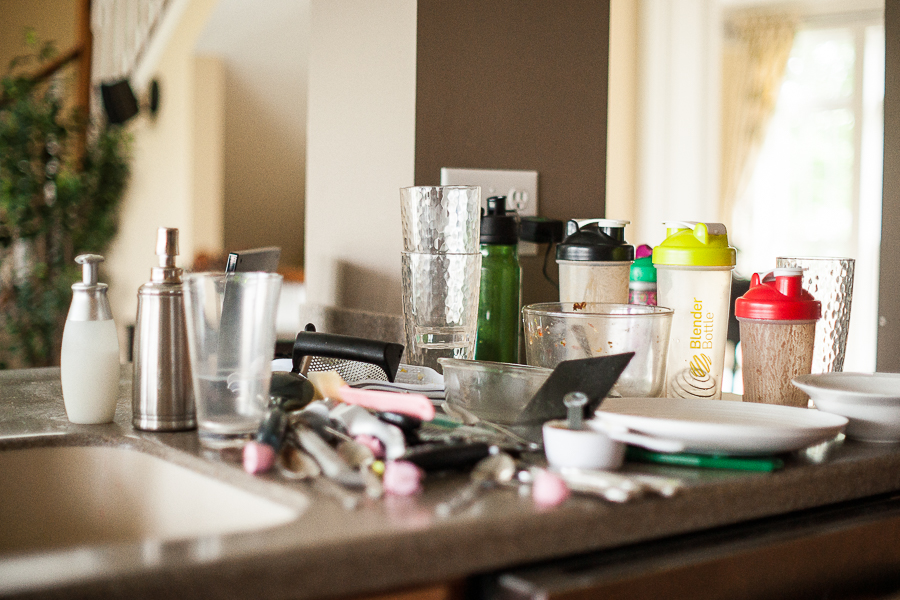
For Some People, Tidy Is Autopilot
SONY DSC
Some people experience tidying almost automatically. When something is out of place, they:
-
Notice it immediately
-
Decide what to do with it quickly
-
Put it away without much internal resistance
So when they say, “I just spend 15 minutes a day cleaning,” it feels completely true to them. Much of what they’re doing doesn’t even register as work. They’re tidying as they go.
But for you, each of those steps costs energy:
-
Noticing the mess is work.
-
Interrupting what you’re doing is work.
-
Deciding where something goes is work.
-
Overriding resistance is work.
All those tiny moments that don’t register for some people add up mentally for you.
That doesn’t mean you’re doing it wrong. It means it’s more expensive for you. And comparing yourself to someone whose brain handles it differently will only make you more discouraged.
The Real Problem Isn’t Effort

When I started half marathon training, I assumed the hardest part would be speed work. It turns out that was the easy part—it was engaging and even kind of fun.
The hardest part has been the long, slow training walks:
-
Two hours.
-
Three hours.
-
Slow on purpose.
There’s no shortcut. You build endurance by putting in the miles. And it’s boring.
Housework is the same way. It’s usually not the big decluttering day that drains you. It’s the repetition:
-
Washing the same dishes again
-
Folding the same towels again
-
Putting the same items back again
The issue isn’t that you’re unwilling to work hard. It’s that repetition is mentally expensive for you.
Some brains tolerate monotony easily. Others don’t. And pretending it shouldn’t feel hard only adds shame to the mix.
So Where Does That Leave You?
No, I don’t have a magic formula that suddenly makes daily maintenance effortless. But I do have a few things that genuinely help.
1. Anchor to a Bigger Reason
When I’m deep into a three-hour training walk and I’d rather be doing almost anything else, I remind myself of two things:
-
My short-term goal is to finish the race.
-
My bigger goal is long-term health.
That deeper purpose keeps me moving when motivation fades.
For you, that deeper reason might be:
-
Wanting to feel proud of your home
-
Creating a haven of peace
-
Walking in the door and feeling your shoulders relax
The bigger the reason, the easier it is to push through the boring middle.
2. Your Effort Still Counts
You really have two choices:
-
Go at the pace you can sustain
-
Or do nothing
Even if I’m at the back of the race pack, I’m still building endurance. I would not be better off quitting just because I’m not the fastest.
The same is true in your home. Even if you wish it could be transformed in a month, steady progress over a year—or even a few years—still changes everything.
Slower doesn’t mean pointless. It means steady.

3. Build in Feedback
One of the most motivating parts of training is immediate feedback. I log my workout, see the numbers, and know it contributed to my goal.
You need that in homemaking too. That might look like:
-
Checking something off
-
Putting a sticker on a chart
-
Texting a friend to share a win
-
Posting progress inside a supportive community
Feedback reminds you that your effort matters.
4. Accept That It Won’t Always Feel Easy
Some days my long training session flies by. Other days I check my watch every five minutes and wonder how I’ll make it to the end.
Both kinds of days count.
When I catch myself thinking, “This is so boring,” I tell myself, “Yes, it’s boring—and it’s working.” You can do the same with dishes, laundry, and tidying. It doesn’t have to feel effortless to be effective.
5. Use Smart Distraction

I rarely do long walks in silence. I layer something enjoyable on top, like:
-
An audiobook
-
A podcast
-
Voice messages from friends
You can do the same with repetitive housework. It’s not cheating. It’s supporting your brain so you can stay consistent!
Stop Comparing. Start Supporting
Some people will always move faster. Some people will always make it look easier.
If keeping a home feels harder for you, the answer isn’t to quit. It’s to stop comparing and start building support around the parts that cost you the most energy.
You are not broken, lazy, or uniquely bad at this! You may simply be paying a higher mental cost for repetitive work—and that’s something you can plan around.
If this made you feel even a little less alone, that was the goal. And if you want ongoing support—not pressure or perfection, but steady encouragement from women who truly understand—that’s exactly why we created Insiders. Sometimes what you need most isn’t a better 15-minute routine. It’s people who get it and will walk alongside you while you keep putting one foot in front of the other.





 Copyright 2026, Get Organized HQ.
Marie Says
That really resonates for me. Thank you!
Debby Owens Says
Laura, I told a friend this article was like a light moment & a great big hug all at once. Thank you so much. I’ve never heard anyone explain it quite like this. So very helpful & encouraging. Especially since at 75 I’m still trying to figure it out. Thank you.
Debby Owens
Debby Owens Says
Previous comment should say “light bulb moment” instead of light moment.